ExploreTCGsets Yu-Gi-Oh!

Learn to play

How to play Yu-Gi-Oh!

Everything you need to play: how a turn works, what every kind of card does, how to build a deck, which cards to look for and which ones collectors chase. Watch the guide video first, then read on.

The guide video

The guide video plays here.

How to play

8000

Bring their Life Points to 0

Both duelists start with 8000 Life Points. Attacks that get through and card effects take them away. The first to reach 0 loses.

∅

They can't draw

A duelist who has to draw a card with no cards left in their Main Deck loses the duel.

5

A card says you win

A few cards win on their own. The most famous: hold all five pieces of Exodia the Forbidden One in your hand.

The kinds of card

Normal MonsterA monster with no effect, just ATK and DEF. Its text is flavour.
Effect MonsterA monster with an ability. Most monsters in a modern deck are these.
Ritual MonsterSummoned with a Ritual Spell by giving up monsters whose Levels add up.
Fusion MonsterWaits in the Extra Deck. Fuse the monsters it names, usually with Polymerization.
Synchro MonsterExtra Deck. Send a Tuner and other monsters whose Levels add up to its Level.
Xyz MonsterExtra Deck. Stack monsters of the same Level under it; it spends them to use its effect.
Pendulum MonsterA monster that can also be played as a Spell. Two Scales let you summon many monsters at once.
SpellPlay it on your turn: Normal, Quick-Play, Continuous, Equip, Field or Ritual.
TrapSet it face down first, then spring it later, even on your opponent's turn.
Extra Monster ZonesShared by both duelists. Monsters from the Extra Deck go here or where a Link Monster points.
Monster ZonesFive. Upright monsters are in Attack Position, sideways ones in Defense Position.
Spell & Trap ZonesFive. The two ends also hold Pendulum Scales.
Field, Graveyard, decksField Spell zone, Graveyard, Main Deck (40 to 60 cards) and Extra Deck (up to 15).
One duelist's side of the field. Banished cards are put aside, face up, out of play.

Setting up

  1. Bring a deck. A Main Deck of 40 to 60 cards and an Extra Deck of up to 15, with no more than three copies of any card (fewer for cards on the Forbidden & Limited list).
  2. Shuffle and draw five. Both duelists start with 8000 Life Points.
  3. Pick who goes first. The first duelist does not draw on their first turn, and nobody can attack on the very first turn of the duel.

Your turn, in order

  1. 1

    Draw

    Draw one card.

  2. 2

    Standby

    Some cards ask for a cost or do something here.

  3. 3

    Main 1

    • Normal Summon or Set one monster a turn.
    • Special Summon as many as your cards allow.
    • Play Spells and Set Spells and Traps.
  4. 4

    Battle

    Each of your Attack Position monsters may attack once.

  5. 5

    Main 2

    The same as Main 1, if you did not Normal Summon yet.

  6. 6

    End

    “During the End Phase” effects happen. Discard down to six cards.

An attack, step by step

  1. Declare. Pick one of your Attack Position monsters and a monster on the other side, or attack directly if they have none.
  2. Respond. Either duelist may activate Quick-Play Spells, Traps or quick effects. They form a chain that resolves last first.
  3. Against Attack Position. The monster with the lower ATK is destroyed and its owner loses the difference in Life Points. A tie destroys both.
  4. Against Defense Position. If ATK beats DEF, the defender is destroyed but nobody loses Life Points. If DEF is higher, the attacker's owner loses the difference.

Words you will see

Tribute Summon
A Level 5 or 6 monster needs one monster sent to the Graveyard to Normal Summon it, Level 7 or higher needs two.
Special Summon
Any summon a card allows besides your one Normal Summon a turn, including every Extra Deck summon.
Chain
Effects activated in response to each other. The last one added resolves first.
Flip
Turning a face-down monster face up. Flip effects happen when that happens.
Tuner
A monster you need for a Synchro Summon.
Overlay units
The cards stacked under an Xyz Monster. It detaches them to use its effects.
Link arrows
The arrows around a Link Monster. Monsters from the Extra Deck can be summoned to zones they point at.
Banish
Remove a card from play. Banished cards are face up, out of the duel unless a card brings them back.
Forbidden & Limited
Konami's list of cards you may not use, or may use only one or two copies of, in tournaments. It changes several times a year.

Reading a monster card

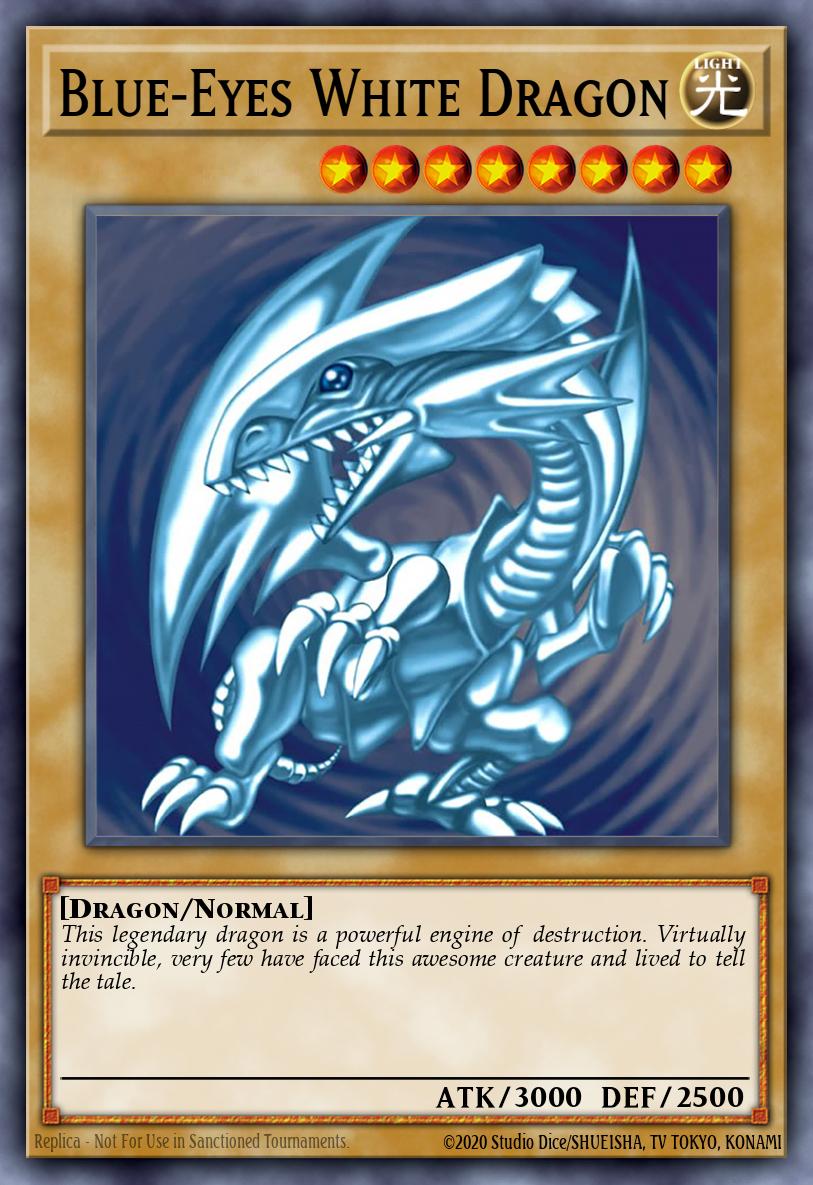
Every monster shows the same things in the same places. Here is Blue-Eyes White Dragon, the legendary dragon from the very first English set, Legend of Blue Eyes White Dragon (2002).
Blue-Eyes White Dragon
  1. Name. Across the top. A deck can have up to three cards with the same name (a few very strong cards only one).
  2. Attribute. The symbol at the top right: LIGHT here. The others are DARK, EARTH, WATER, FIRE, WIND and DIVINE. Some cards care about it.
  3. Level. The stars: 8. Level 1 to 4 monsters can be Summoned for free; Level 5 and 6 need 1 Tribute and Level 7 or more need 2.
  4. Type and card kind. In square brackets: [Dragon/Normal]. Dragon is its Type; Normal means it has no effect, just flavour text. An Effect Monster has [Effect] and its effect in the text box.
  5. ATK and DEF. Bottom right: ATK 3000, DEF 2500. ATK is its attack strength; DEF is how hard it is to break when it's in Defense Position.
  6. Frame colour. Yellow for Normal monsters, orange for Effect, blue for Ritual, purple for Fusion, white for Synchro, black for Xyz, dark blue for Link. Spells are green and Traps are pink-purple.

Every kind of card, and what it does

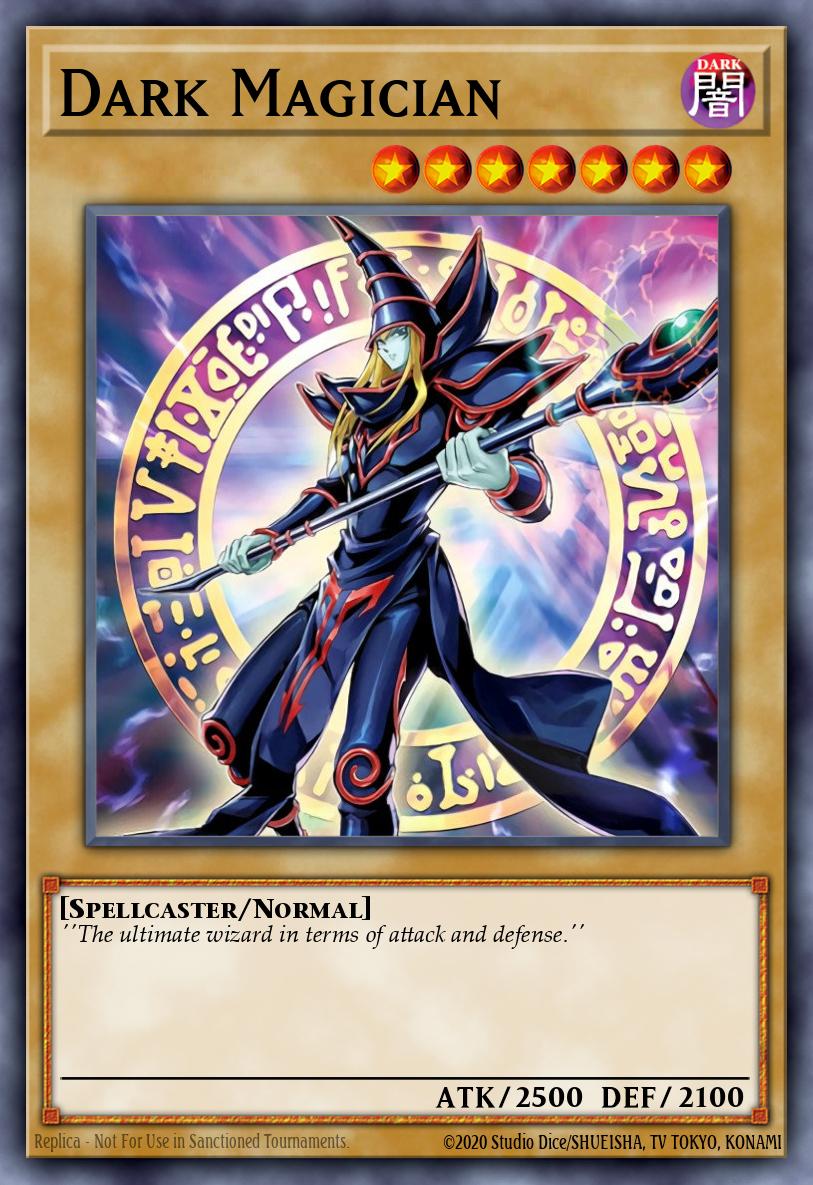
Dark Magician, a Normal Monster

Normal Monsters

Monsters with no effect: they fight with their ATK and DEF. Dark Magician, Yugi's favourite card, is a Level 7 Normal Monster with 2500 ATK.
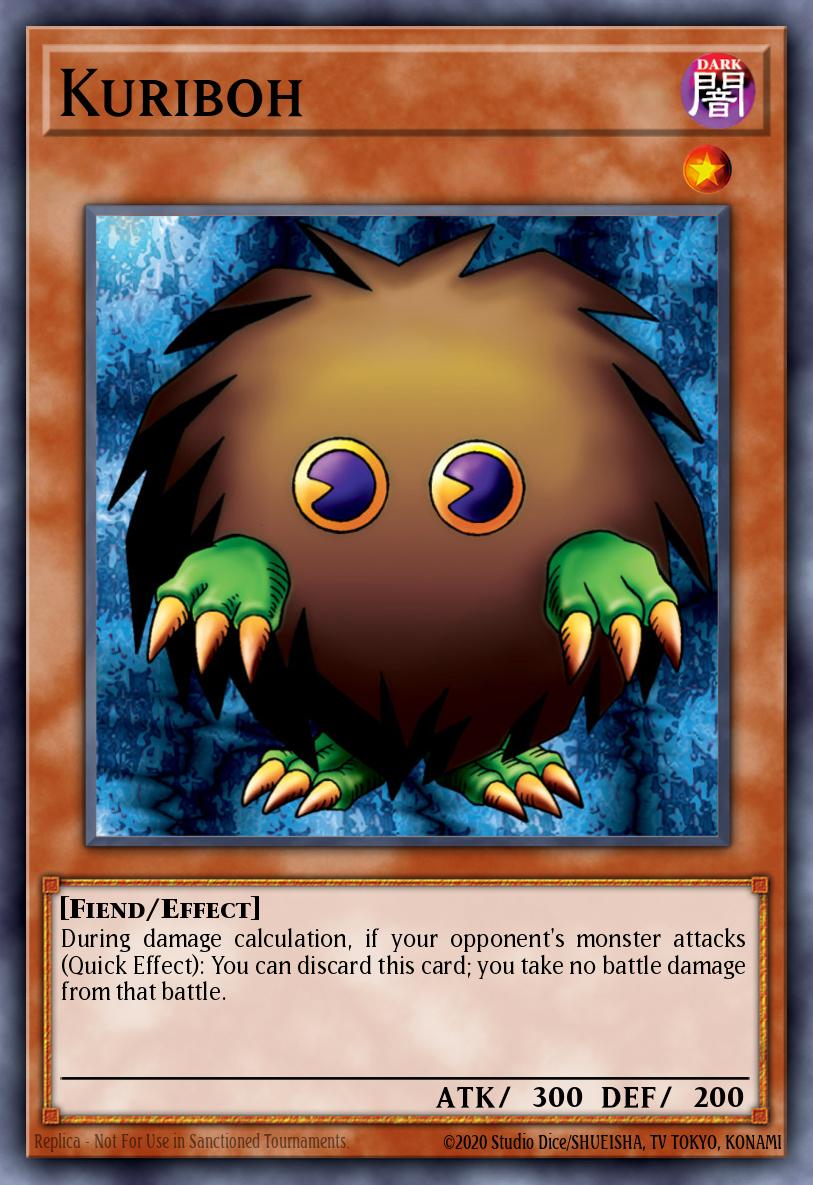
Kuriboh, an Effect Monster

Effect Monsters

Monsters with something extra in the text box: an effect when they're Summoned, when they're flipped face-up (FLIP), when they destroy a monster, or one you can use once per turn. Kuriboh saves you from a big hit.
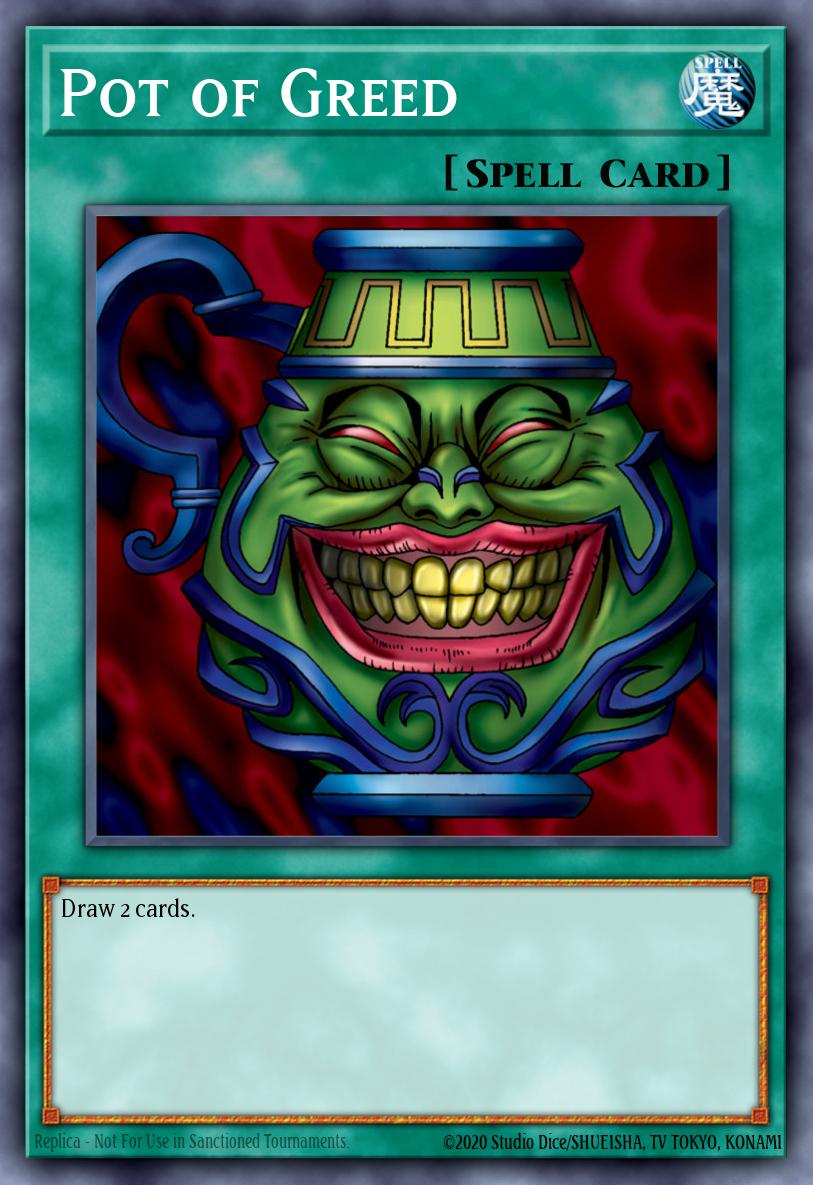
Pot of Greed, a Spell Card

Spell Cards

Played from your hand in your Main Phase. Normal Spells work once (Pot of Greed draws 2 cards), Equip Spells stay on a monster, Field and Continuous Spells stay on the field, and Quick-Play Spells can also be Set and used on the other player's turn.
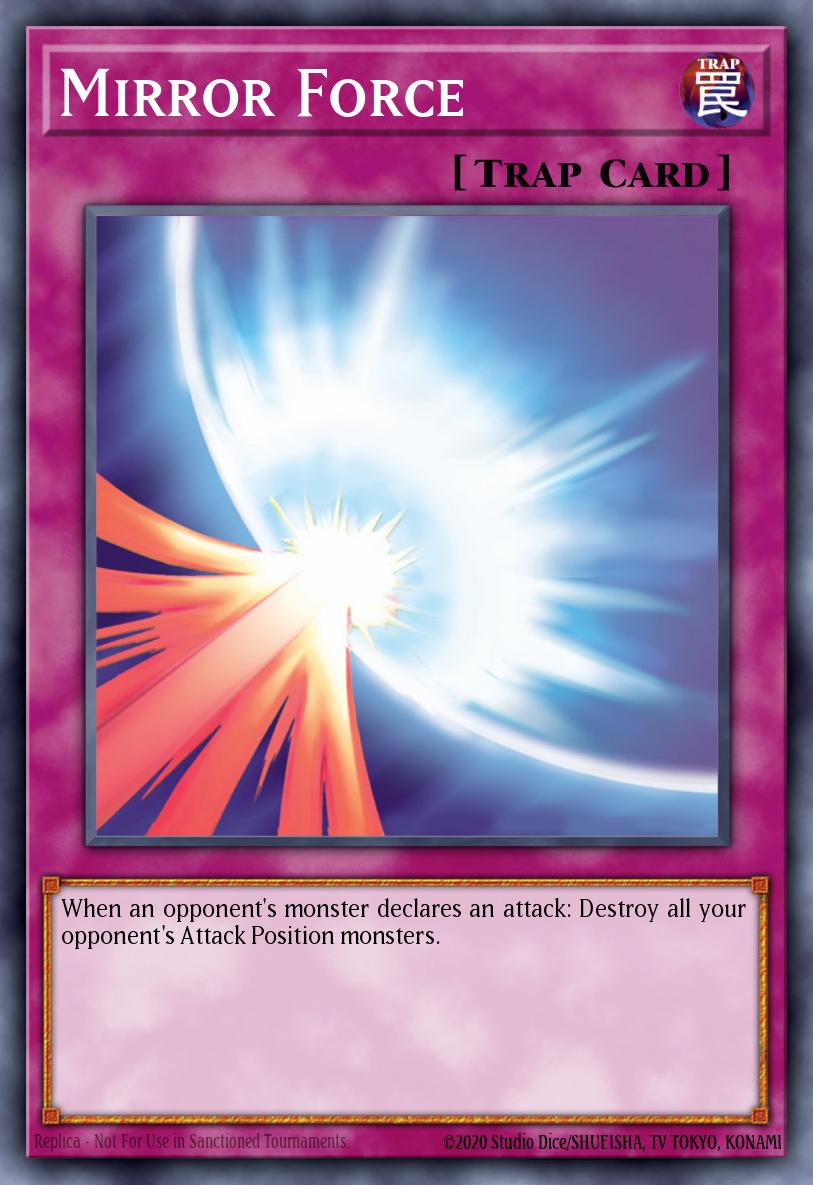
Mirror Force, a Trap Card

Trap Cards

Set face-down first, then sprung later, from the next turn on, often on the other player's turn. Mirror Force waits for the other player to attack, then destroys all of their Attack Position monsters.
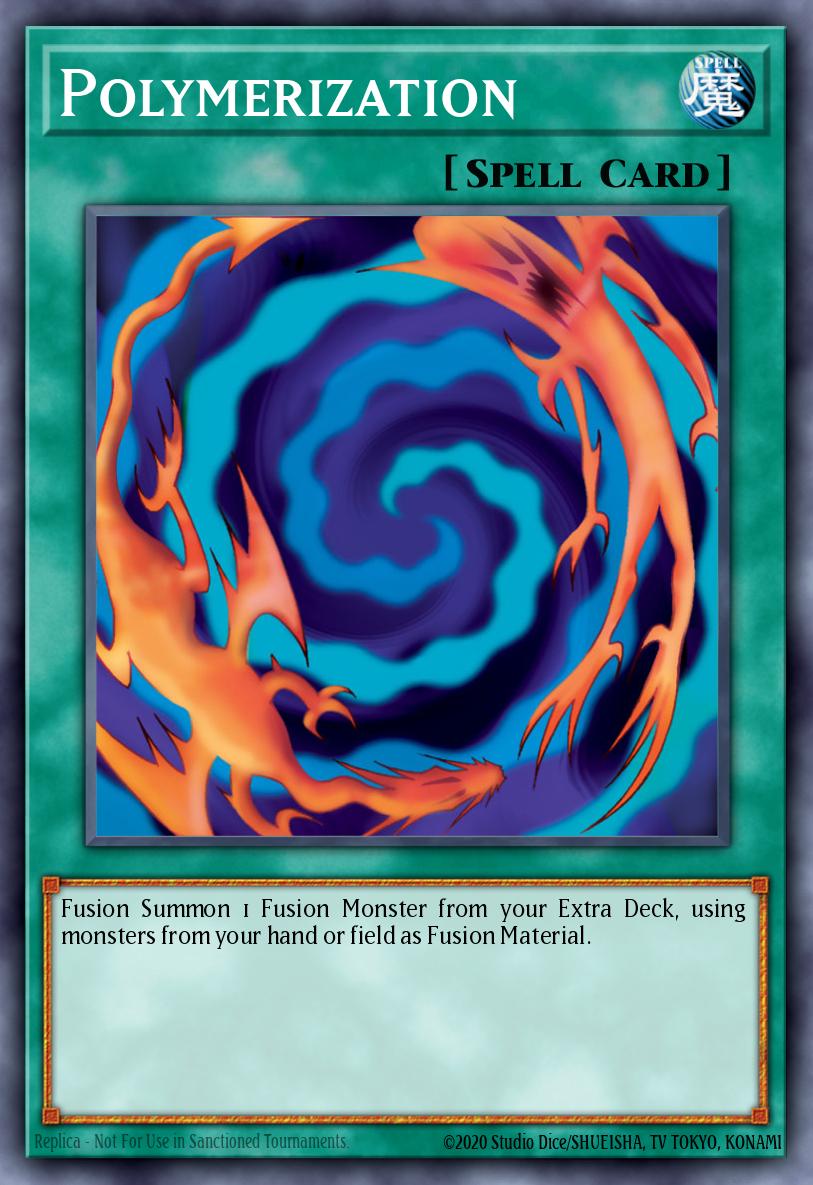
Polymerization, a Spell that makes a Fusion Monster

Fusion and Ritual

Polymerization fuses the monsters named on a Fusion Monster into it. A Ritual Monster needs its Ritual Spell plus Tributes whose Levels add up to its Level.
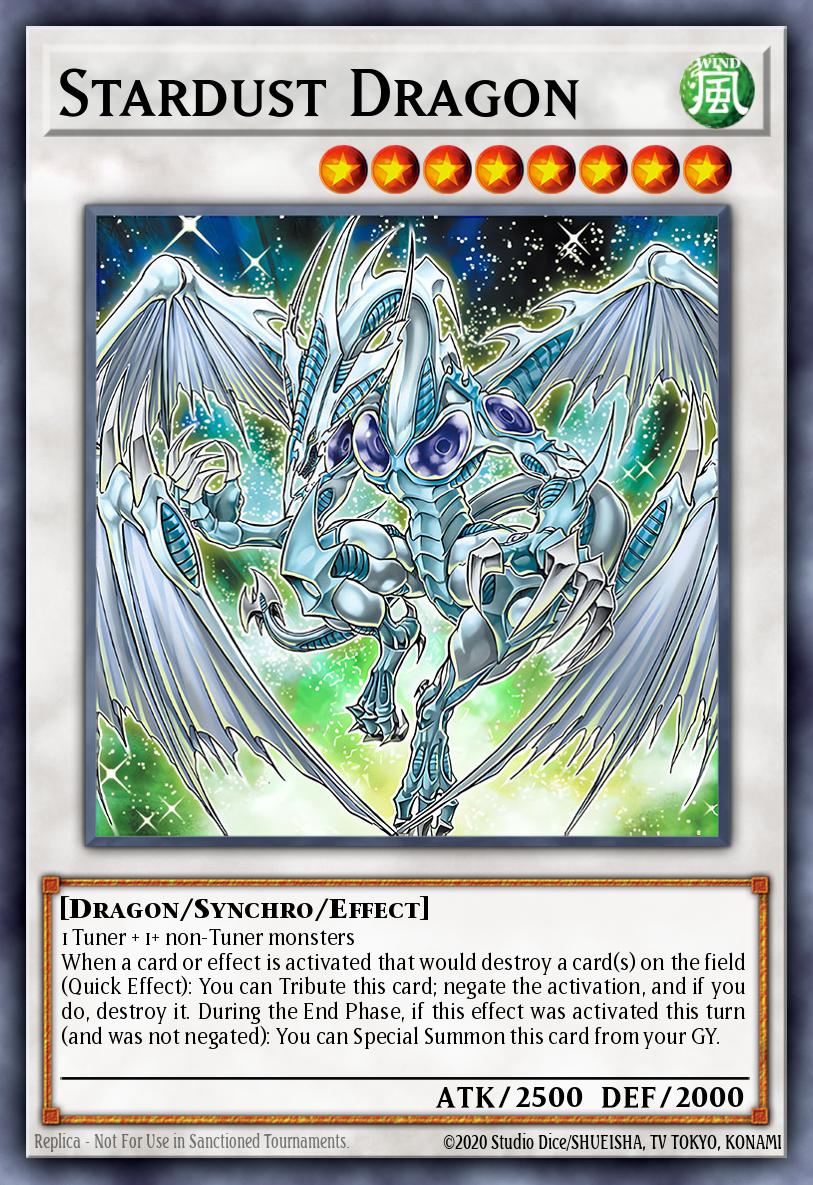
Stardust Dragon, a Synchro Monster

Synchro, Xyz and Link

Extra Deck monsters you make from monsters already on your field, with no Spell needed. Stardust Dragon is a Synchro Monster: a Tuner plus other monsters whose Levels add up to 8.

Summoning, step by step

  1. One Normal Summon a turn. Put a monster from your hand face-up in Attack Position, or Set it face-down in Defense Position. You get one of these each turn, so choose well.
  2. Tributes for big monsters. To Summon a Level 5 or 6 monster, send 1 of your monsters to the GY first; Level 7 or more needs 2. Blue-Eyes White Dragon needs two Tributes.
  3. Flip Summon. A face-down monster you Set on an earlier turn can be flipped face-up into Attack Position. Its FLIP effect happens then.
  4. Special Summons. Any number a turn: from card effects (Monster Reborn brings one back from a GY), from monsters that Summon themselves, and from the Extra Deck.
  5. Change positions. Once a turn per monster, switch it between Attack and Defense Position, but not on the turn it arrived or attacked.

Battle, and what each fight does

In your Battle Phase each of your Attack Position monsters can attack once. The player who goes first can't attack on the very first turn. If the other player has no monsters, you attack them directly and they lose Life Points equal to your monster's ATK.

⚔️ ATK against ATK

The lower one is destroyed, and its player loses the difference. A tie destroys both, with no damage.

🛡️ ATK against DEF

If your ATK is higher, the defender is destroyed but nobody loses Life Points. If it's lower, nothing is destroyed and you lose the difference.

🂠 A face-down monster

It's flipped face-up when attacked, then the fight happens. Its FLIP effect goes off too.

🎯 Piercing

Some monsters deal the difference as damage even when they beat a Defense Position monster.

🪤 Traps on attack

When you declare an attack, the other player can spring a Trap: negate it, destroy your attacker, or more.

💥 Effects that win fights

Equip Spells, Quick-Play Spells and monster effects that change ATK and DEF turn battles around.

The Extra Deck

Next to your Main Deck sits an Extra Deck of up to 15 monsters. They're never drawn: you Summon them by using monsters you already have as materials.
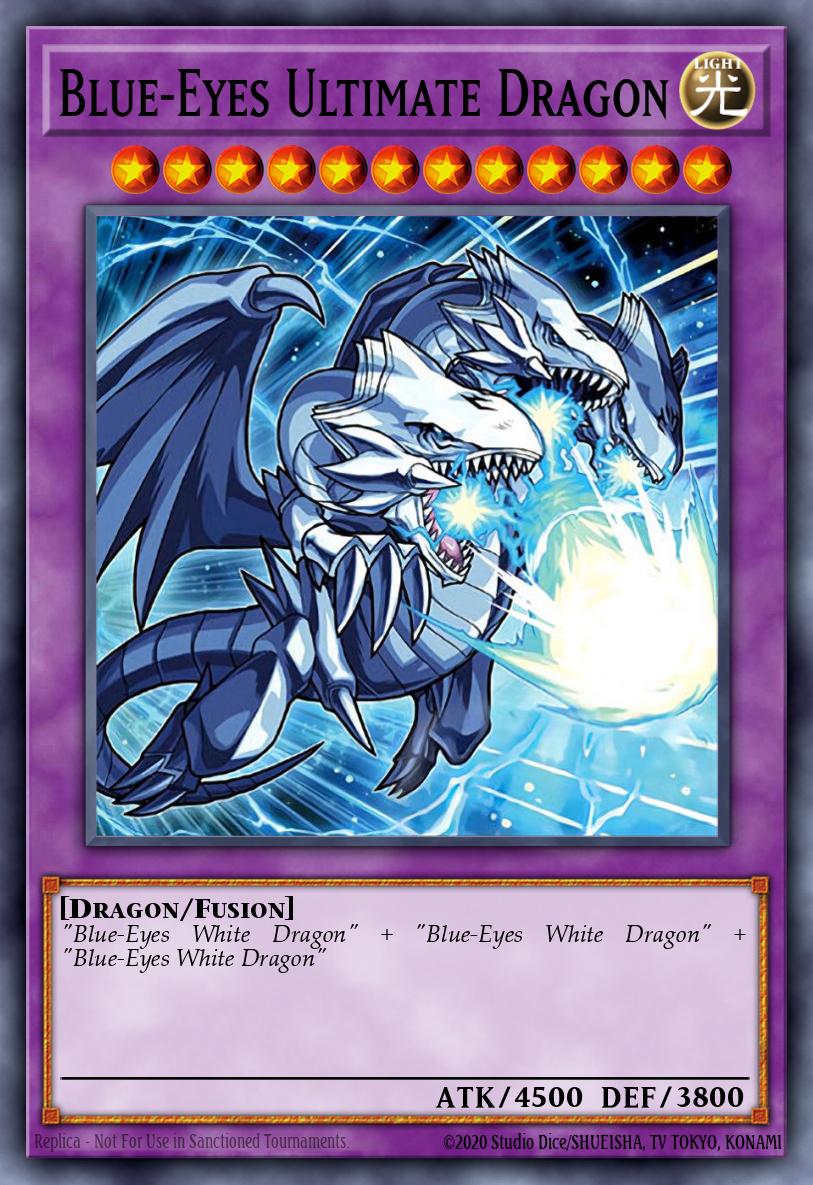
Blue-Eyes Ultimate Dragon, a Fusion Monster

Fusion (purple)

Needs a Fusion Spell such as Polymerization and the materials it names, from your hand or field. Three Blue-Eyes White Dragon make Blue-Eyes Ultimate Dragon, 4500 ATK.

Stardust Dragon, a Synchro Monster

Synchro (white)

One Tuner monster plus non-Tuners on your field, with Levels adding up exactly to the Synchro Monster's Level.
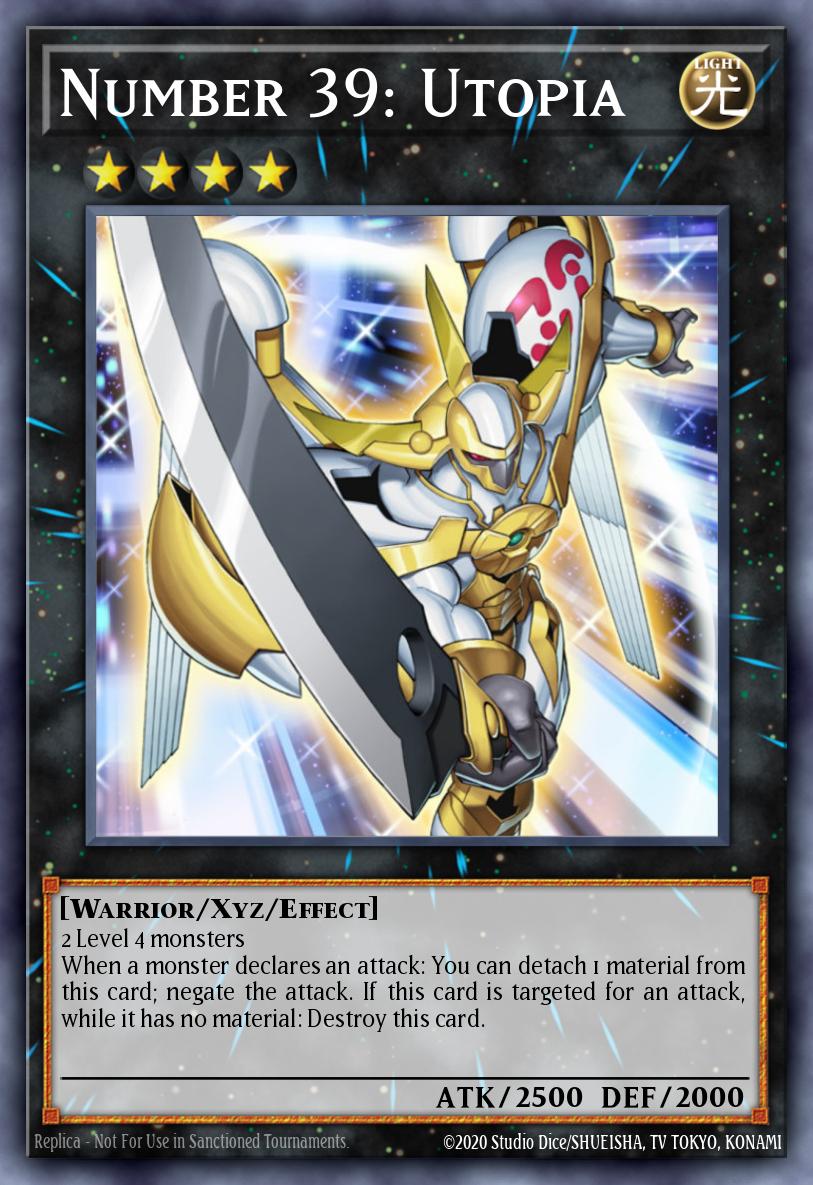
Number 39: Utopia, an Xyz Monster

Xyz (black)

Two or more monsters of the same Level, stacked under it as materials. It has a Rank, not a Level, and often detaches a material to use its effect. Utopia takes two Level 4s.
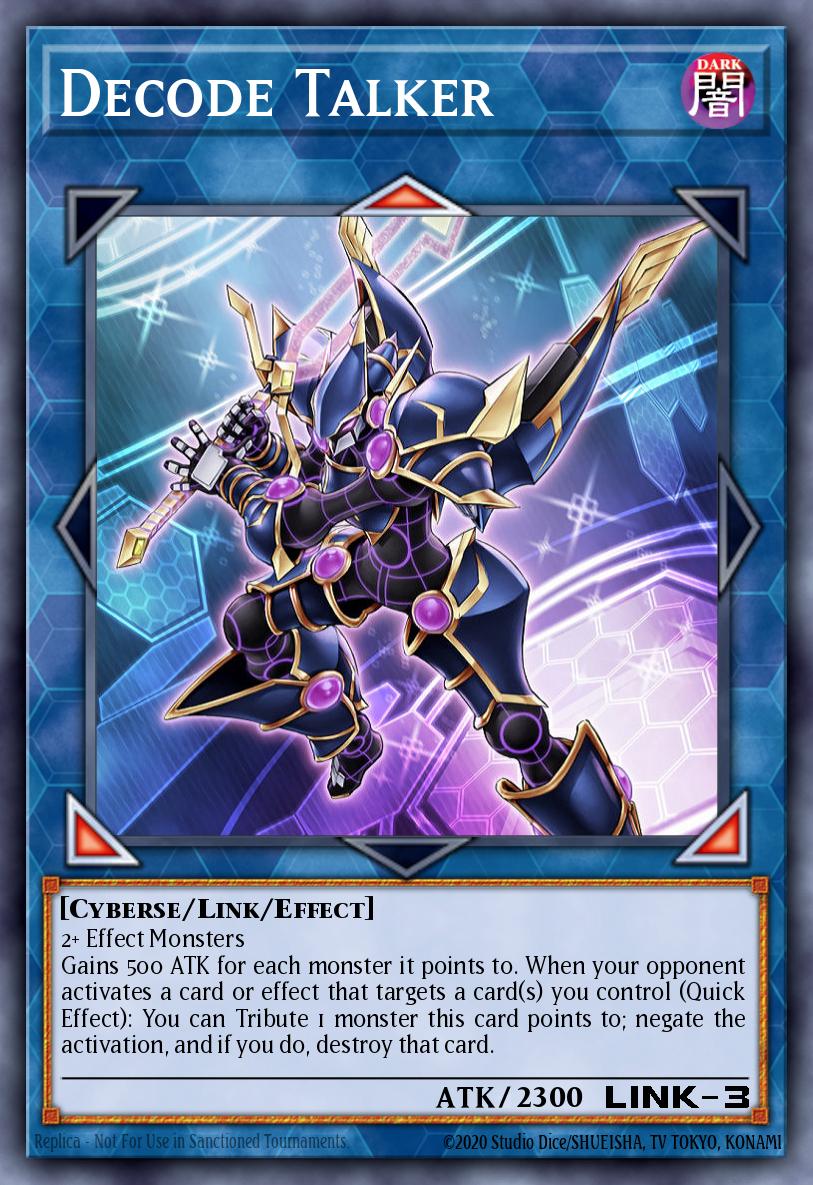
Decode Talker, a Link Monster

Link (dark blue)

Monsters on your field sent to the GY as materials, as many as its Link Rating. Link Monsters have no DEF and are always in Attack Position.

Building a deck

A Main Deck is 40 to 60 cards (40 is best: you draw your best cards more often), with no more than three of any card. A good starting shape:

18–22Monsters

Mostly Level 4 or lower so you can Summon them for free, with a few Level 5–6 and one or two big Level 7–8 bosses.

10–14Spells

Removal (Raigeki, Dark Hole), monsters back (Monster Reborn), cards that draw or search, and Equip Spells.

6–10Traps

Answers to attacks (Mirror Force, Sakuretsu Armor) and to Summons (Trap Hole).

What to look for when you collect

  • Strong Level 4 monsters. 1800–1900 ATK with no Tribute is the backbone of any deck.
  • Removal. Spells and Traps that destroy or banish monsters break open a stalled duel.
  • Cards that are worth two. A monster that draws, searches or destroys when it's Summoned gives you a card and a body.
  • Monsters that work together. Cards from the same archetype (Blue-Eyes, Dark Magician, HERO, Blackwing…) are built to help each other.
  • Extra Deck targets. Level 4 pairs make Xyz Monsters; Tuners make Synchros. A few Extra Deck monsters give your deck more ways to win.
  • Not too many big monsters. Two-Tribute monsters stuck in your hand with nothing to Tribute lose duels.

Ready to duel?

  1. Start right away with a practice deck. The Yu-Gi-Oh! Arena deals you a free random 40-card deck from a set, plus the Extra Deck monsters it can make. Swap any card you don't like (♻) and duel the computer.
  2. Collect your own cards. Open your free Daily PlayPack every day. Every card goes into your PlayBinder.
  3. Duel with your PlayBinder. Once your cards make a full 40-card Main Deck by themselves (every card pulled in your Play Packs; there are no free cards in Yu-Gi-Oh!), the Arena builds the best deck your collection allows, with the Extra Deck monsters you've pulled. Until then, practice with a random deck. The Arena shows how close you are.
  4. Climb the ranks. Ten levels from Novice to Grandmaster. Beat one to unlock the next. Every level you beat makes your Yu-Gi-Oh! streak bonus cards rarer.

The most wanted Yu-Gi-Oh! cards

Over twenty years of sets have made some cards legends. A few (they can turn up in Play Packs from sets that print them, just rarely):

  • Blue-Eyes White DragonBlue-Eyes White DragonLegend of Blue Eyes White Dragon, 2002, Ultra Rare

    Kaiba's dragon, 3000 ATK. First-edition copies are among the most valuable cards in the game.

  • Dark MagicianDark MagicianLegend of Blue Eyes White Dragon, 2002, Ultra Rare

    Yugi's signature monster, reprinted again and again with new art.
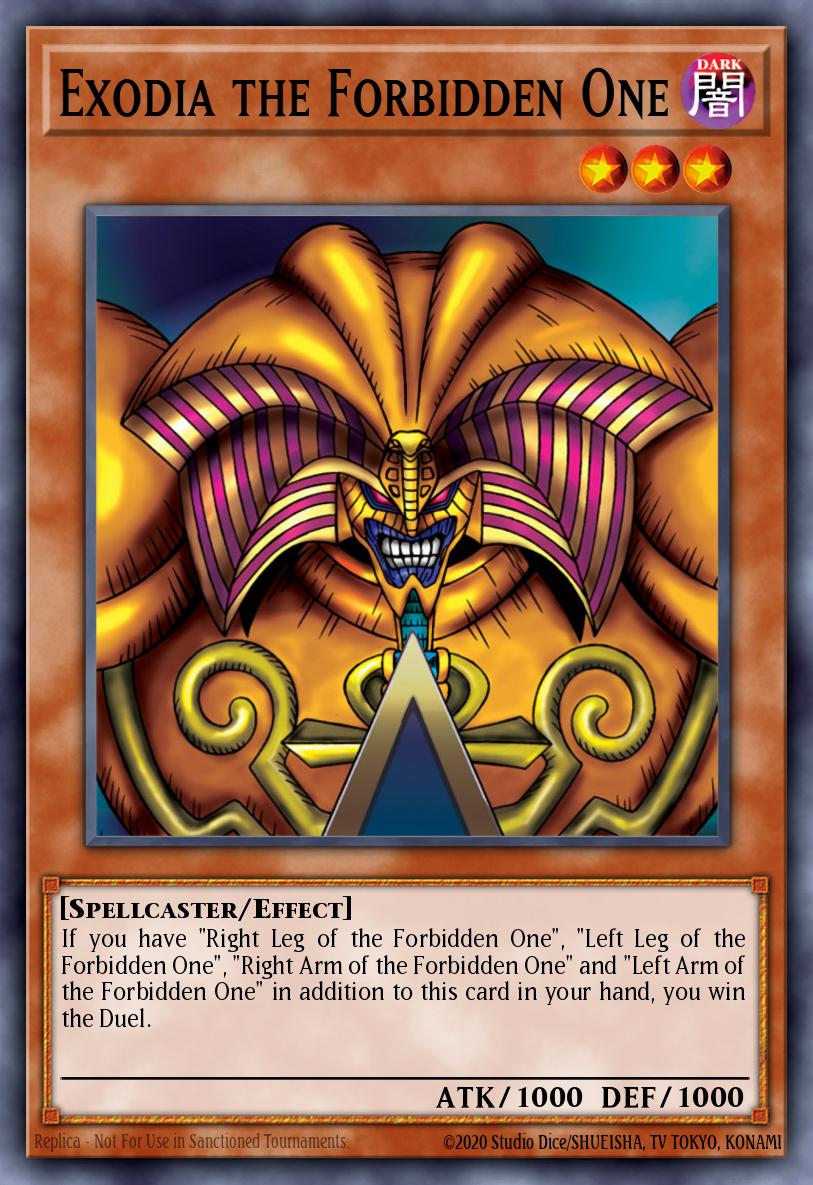
  • Exodia the Forbidden OneExodia the Forbidden OneLegend of Blue Eyes White Dragon, 2002, Ultra Rare

    Hold its head and all four limbs in your hand and you win the duel on the spot.
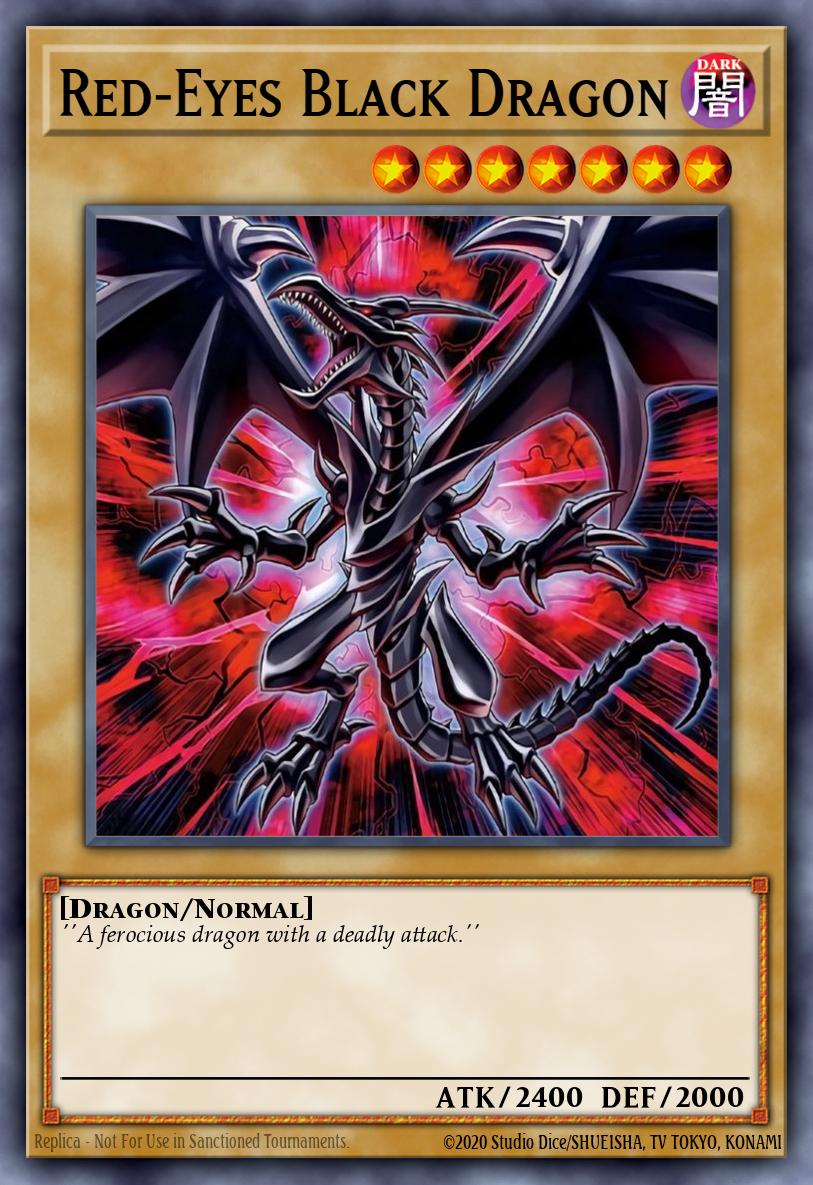
  • Red-Eyes Black DragonRed-Eyes Black DragonLegend of Blue Eyes White Dragon, 2002, Ultra Rare

    Joey's dragon, and the start of a whole family of Red-Eyes cards.

  • Pot of GreedPot of GreedLegend of Blue Eyes White Dragon, 2002, Rare

    Draw 2 cards for nothing. So strong it has been Forbidden for years.

  • Stardust DragonStardust DragonThe Duelist Genesis, 2008, Ultra and Ultimate Rare

    The face of the Synchro era and Yusei's ace.

  • Number 39: UtopiaNumber 39: UtopiaGeneration Force, 2011, Ultra Rare

    The first Xyz ace: two Level 4s and it stops attacks.
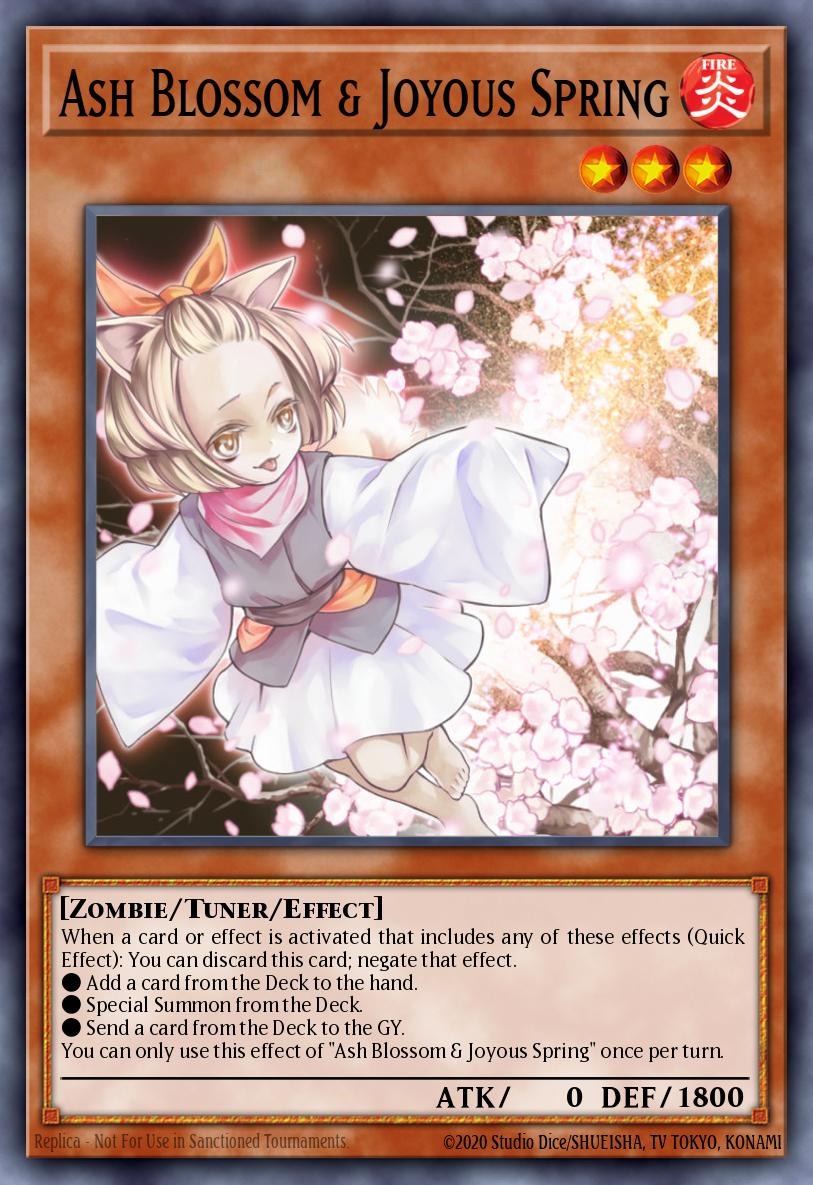
  • Ash Blossom & Joyous SpringAsh Blossom & Joyous SpringMaximum Crisis, 2017, Secret Rare

    The hand trap almost every modern deck plays.

Collector prices change all the time and depend on edition and condition. Play Packs are just for fun: your PlayBinder cards aren't real cards and can't be sold.

How the Arena plays

The Arena plays the real game: 8000 Life Points, a 40-card Main Deck (three copies at most, one of a few classic cards like Pot of Greed and Raigeki) and an Extra Deck, a 5-card opening hand, no draw for the player who goes first and no attacks on the very first turn, one Normal Summon or Set a turn with Tributes for Level 5 and up, Flip Summons and position changes, five Monster Zones and five Spell & Trap Zones, battle between Attack and Defense Position monsters, direct attacks, and a 6-card hand limit at the end of the turn. Fusion, Ritual, Synchro, Xyz and Link Summons all work, with the materials picked for you.

The most common card texts work too: destroy, banish, return to the hand or Deck, draw, search the Deck, damage and Life Points, ATK and DEF changes, battle positions, Special Summons from the hand, Deck or GY, Tokens, Equip Spells, "all monsters gain" Fields and Continuous cards, negating an attack, piercing and direct attacks, and monster effects on Summon, FLIP, battle, the Standby Phase and "once per turn". Traps and Set Quick-Play Spells can answer an attack or a Summon. Card text the Arena can't play yet is still shown on the card: such Spells and Traps can't go in a practice deck, and such monsters play with their ATK and DEF. Answers happen straight away (there are no chains), so hand traps and Counter Traps against Spells aren't played yet.