Character
Has Strength (damage it deals), Willpower (damage it can take) and a Lore value. Quests for lore or challenges, from the turn after it arrives.
Learn to play
Everything you need to play: how a turn works, what every kind of card does, how to build a deck, which cards to look for and which ones collectors chase. Watch the guide video first, then read on.
The guide video plays here.
Characters quest to collect lore, and locations add lore at the start of your turn. The first player to reach 20 lore wins.
A player who has to draw a card from an empty deck loses the game.
A deck uses one or two inks. Since Archazia's Island, some cards are two inks at once.
Has Strength (damage it deals), Willpower (damage it can take) and a Lore value. Quests for lore or challenges, from the turn after it arrives.
A one-time effect. Play it, do what it says, then put it in the discard pile.
An action you can also play for free by having a character sing it: exert a character whose cost is at least the number shown.
An object that stays in play. Many can be used the turn you play them.
A place your characters can move to. It gives you lore at the start of each of your turns. Added in Into the Inklands.
“At the end of your turn” effects happen, then it's your opponent's turn.
This is a summary for new players. Ravensburger's official rules have every detail, and they win any disagreement with this page.
Every Lorcana character card shows the same things in the same places. Here is Mickey Mouse, Brave Little Tailor, a Legendary card from the very first set, The First Chapter (2023).
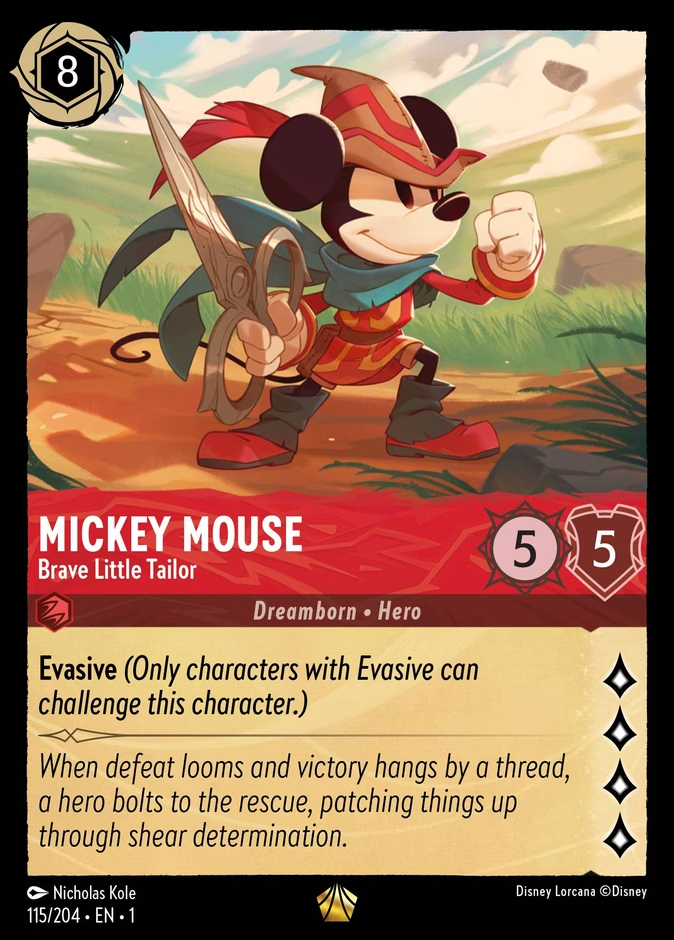
Rarities from common to rare: Common, Uncommon, Rare, Super Rare, Legendary, then the special printings: Enchanted (full-art versions), Epic and Iconic.
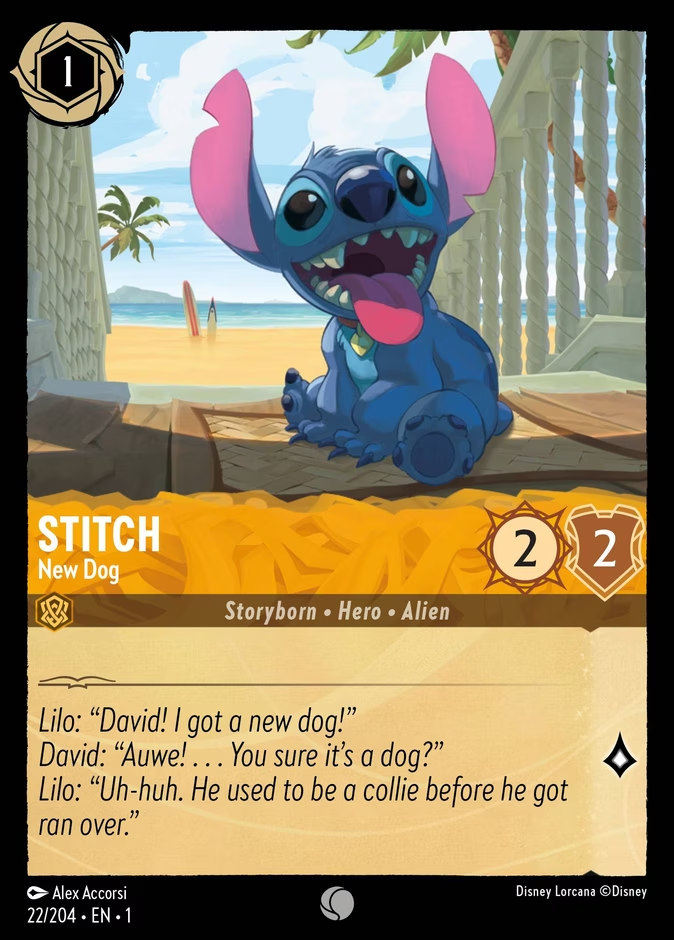
The heart of every deck. Play them with ink; from your next turn (once their "ink has dried") they can quest for lore or challenge an exerted opposing character. Most decks run 30 or more.
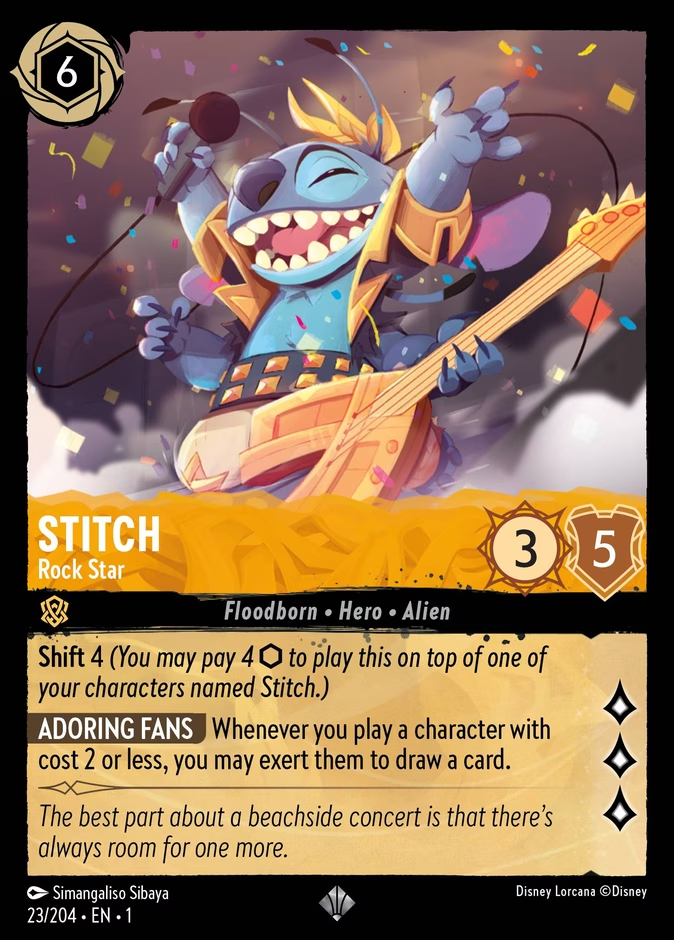
Stronger versions you can play for their Shift cost on top of a character with the same name. Stitch, Rock Star costs 6, or Shift 4 onto any Stitch. A shifted character keeps the one underneath's damage and can act straight away if that one was dry.
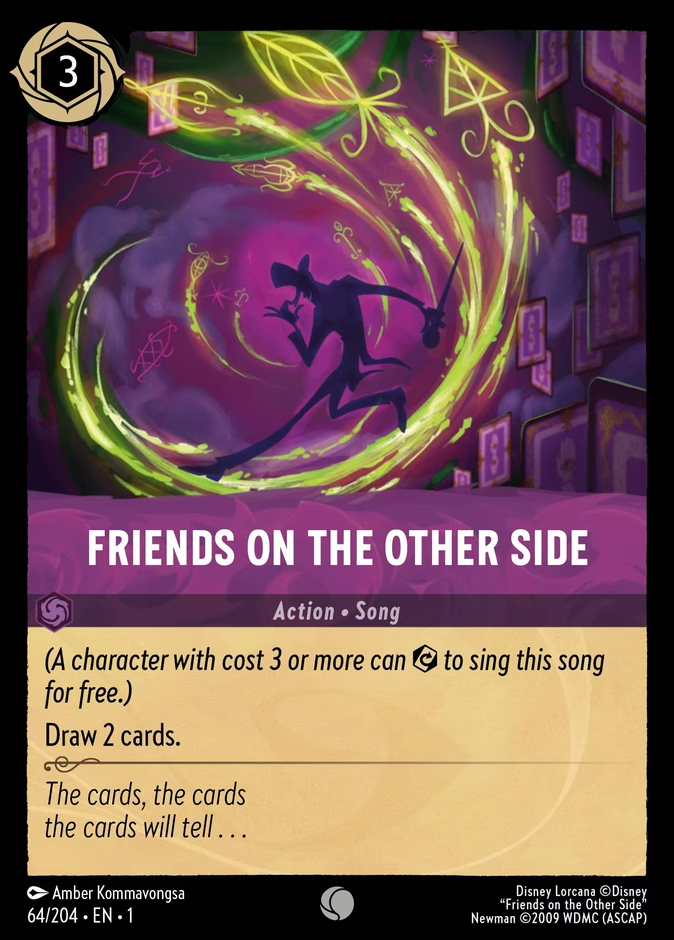
One-shot effects, then they go to the discard pile. Songs are actions that one of your characters can sing for free: exert a dry character whose cost is at least the song's cost (Friends on the Other Side costs 3, so any cost-3 character can sing it and you draw 2 cards).
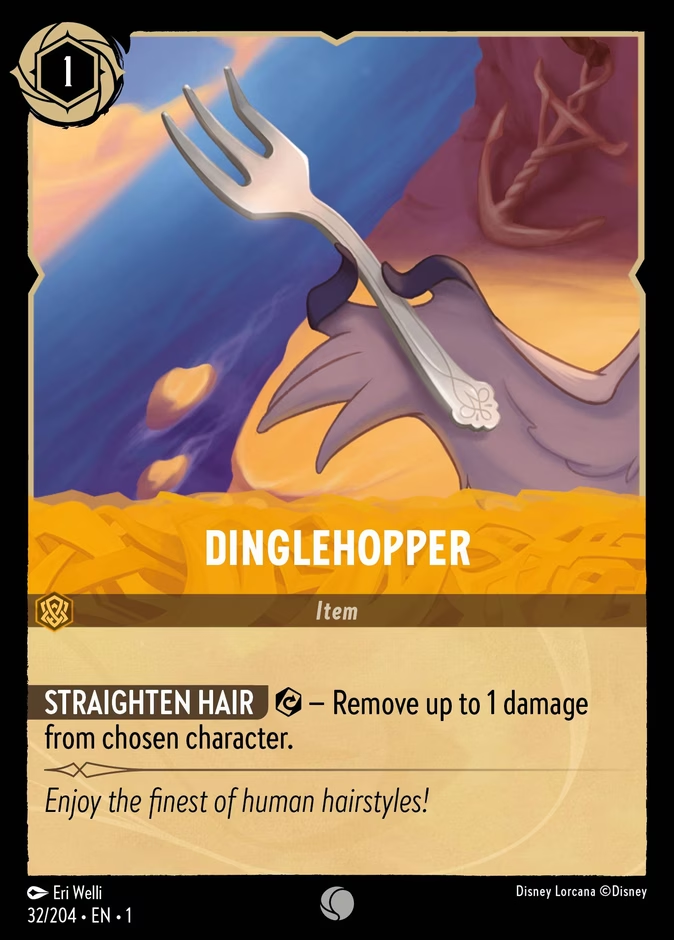
They stay in play. Many have an ability you use by exerting the item (Dinglehopper: remove 1 damage). Items don't need to dry, so you can use one the turn you play it.
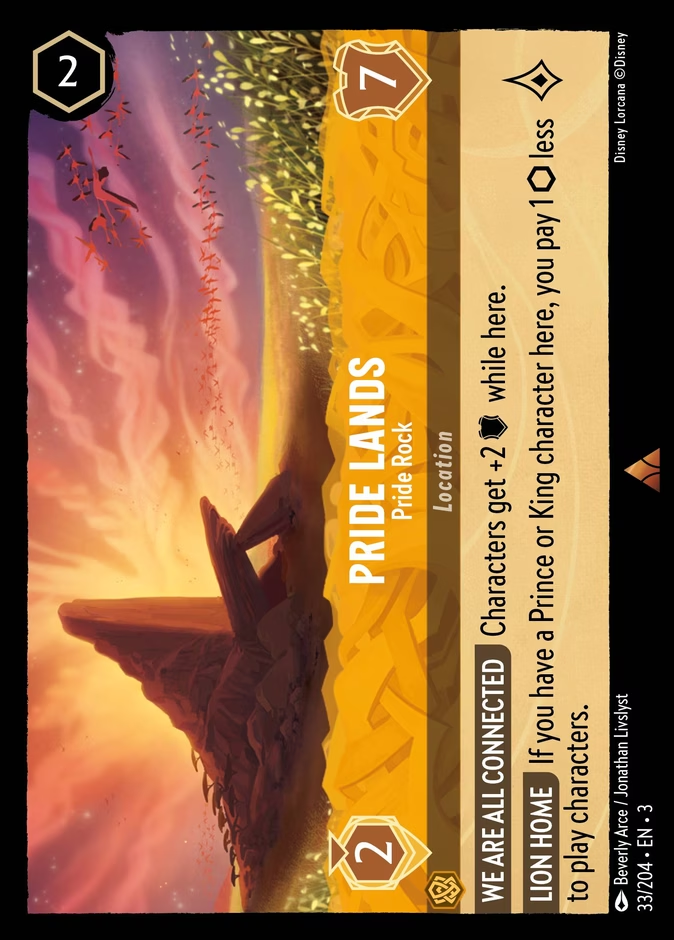
Places (from Into the Inklands on) that give you their lore at the start of each of your turns. Characters can move to them for the move cost and get their bonuses. Opposing characters can challenge a location at any time: it takes damage but deals none back.
Once a turn, put one inkable card from your hand into your inkwell, face down. Each card there is 1 ink to spend every turn. Every card can be ink, so choosing what to ink and what to keep is one of the big decisions of the game.
Many characters have a keyword in bold. Each one is a short rule:
May enter play exerted. An opponent who challenges has to pick a Bodyguard if they can.
Only characters with Evasive can challenge it.
Can challenge the turn it's played (but still can't quest).
Gets +N Strength while it's challenging.
Damage dealt to it is reduced by N.
Can't quest, and has to challenge if it can.
When it quests, add its Strength to another of your characters this turn.
Your opponent can't choose it with their cards' effects (they can still challenge it).
Sings songs as if its cost were N.
A song any number of your characters can sing together if their costs add up to N.
Play it for N on top of a character with the same name.
When an opponent chooses it for an action, it's banished.
A deck has at least 60 cards (almost everyone plays exactly 60), no more than four copies of any card (same name and version), in one or two inks. A good starting shape:
A curve from cheap to big: plenty at 1–3 ink to start questing early, a solid middle at 4–5, and a few big finishers at 6+.
Removal (deal damage, banish), card draw, and songs your characters can sing for free.
Steady value over the game: extra lore each turn, card draw or protection.
Enchanted cards (full-art versions that turn up only rarely) and the newer Iconic cards are what collectors chase most. A few favourites (they can turn up in Play Packs from their sets, just rarely):
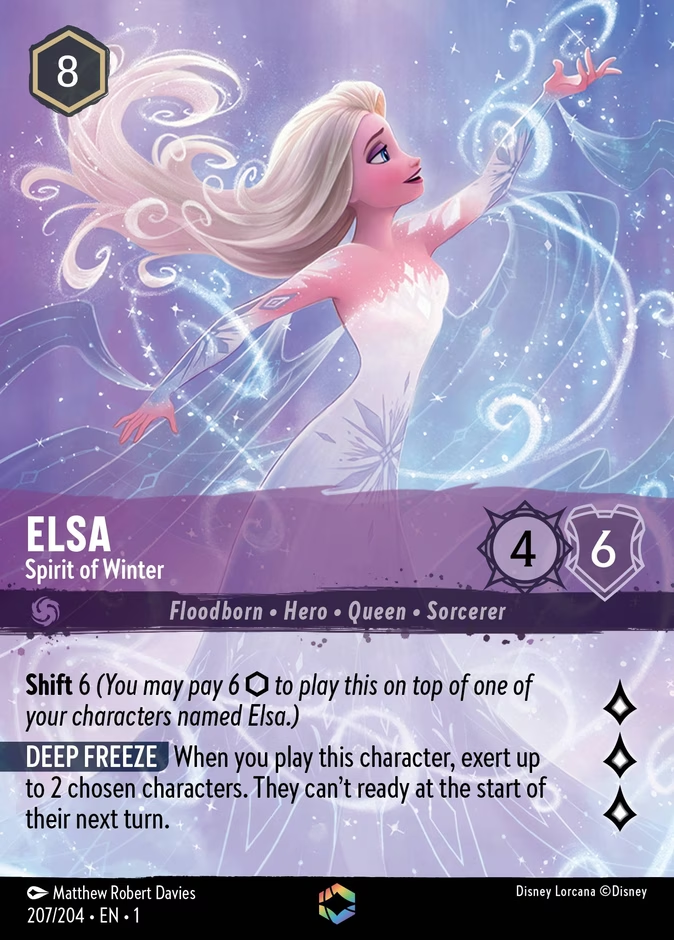 Elsa, Spirit of WinterThe First Chapter, Enchanted
The best-known Enchanted from the first set, and a strong card to play too.
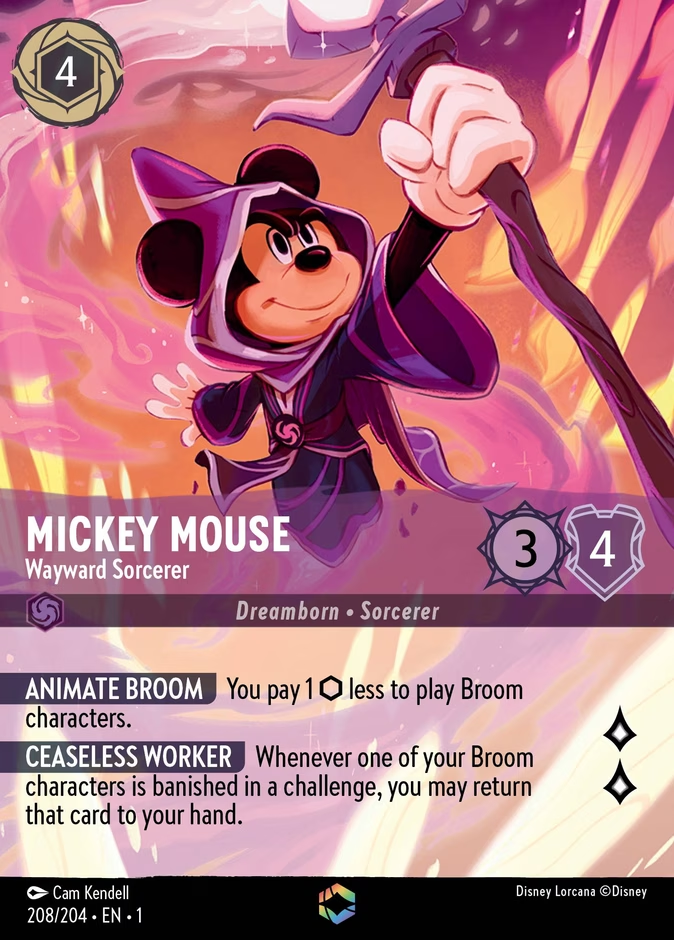 Mickey Mouse, Wayward SorcererThe First Chapter, Enchanted
Mickey as the Sorcerer's Apprentice: the classic chase card of the launch.
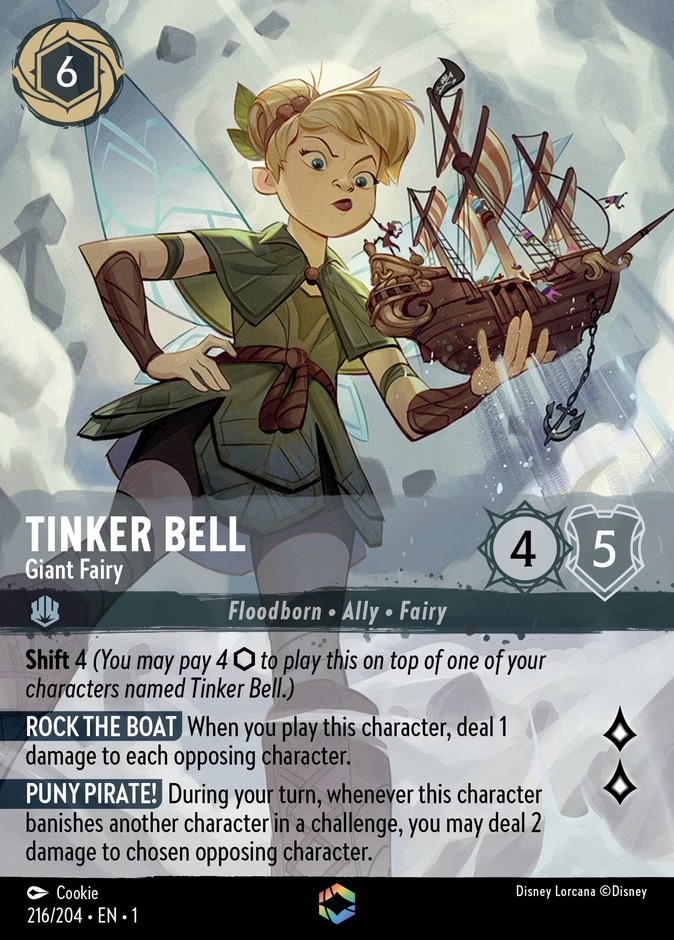 Tinker Bell, Giant FairyThe First Chapter, Enchanted
A fan favourite for its art.
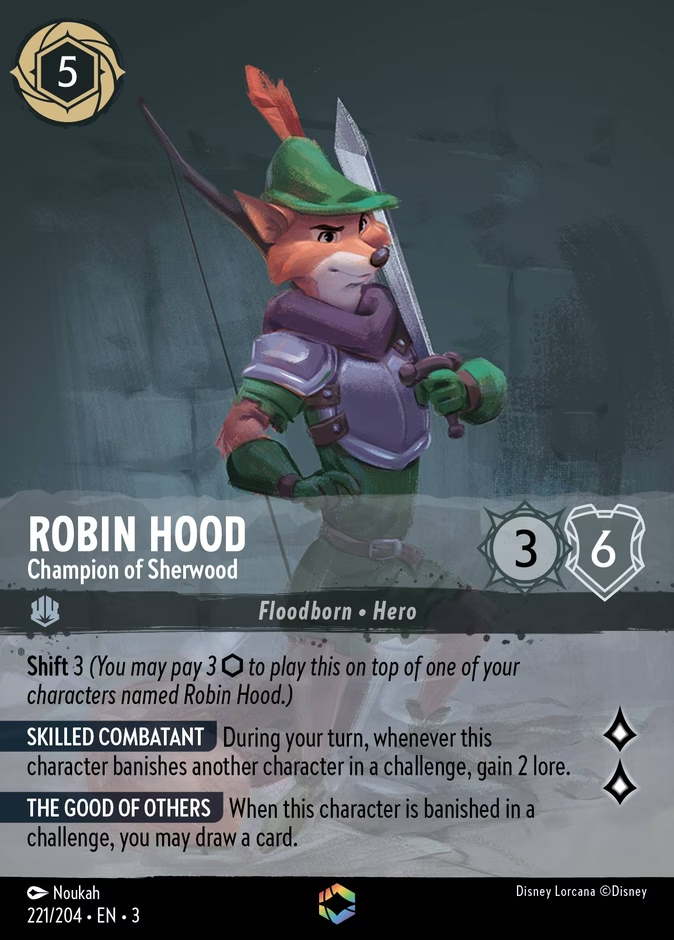 Robin Hood, Champion of SherwoodInto the Inklands, Enchanted
One of the most wanted cards of the third set.
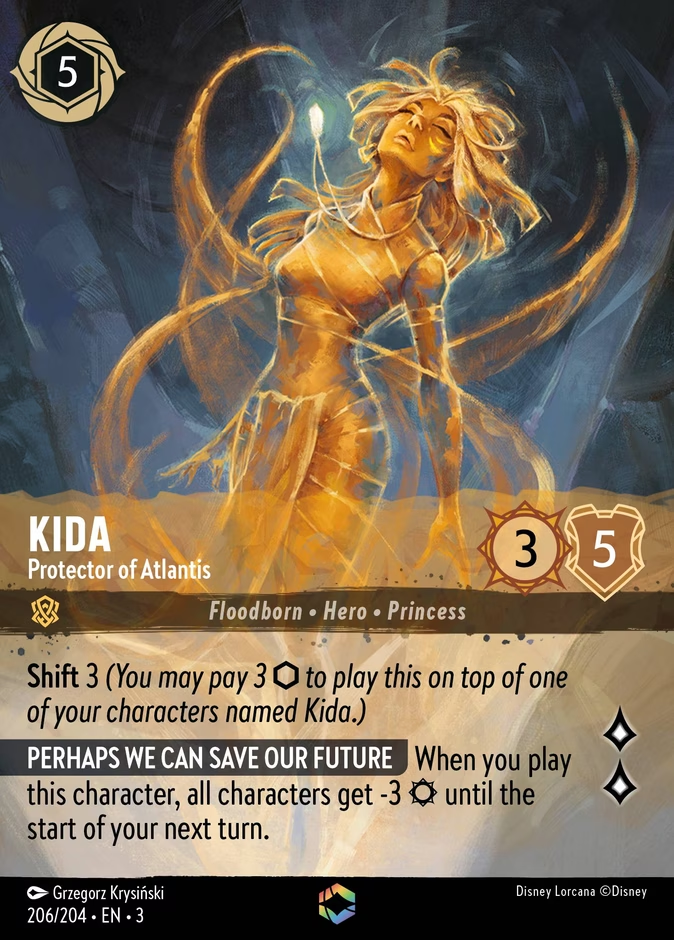 Kida, Protector of AtlantisInto the Inklands, Enchanted
Atlantis arrived in Lorcana with this one.
Mickey Mouse, Brave Little TailorThe First Chapter, Legendary4 lore and Evasive: a game-winner, and the card on this page's anatomy.
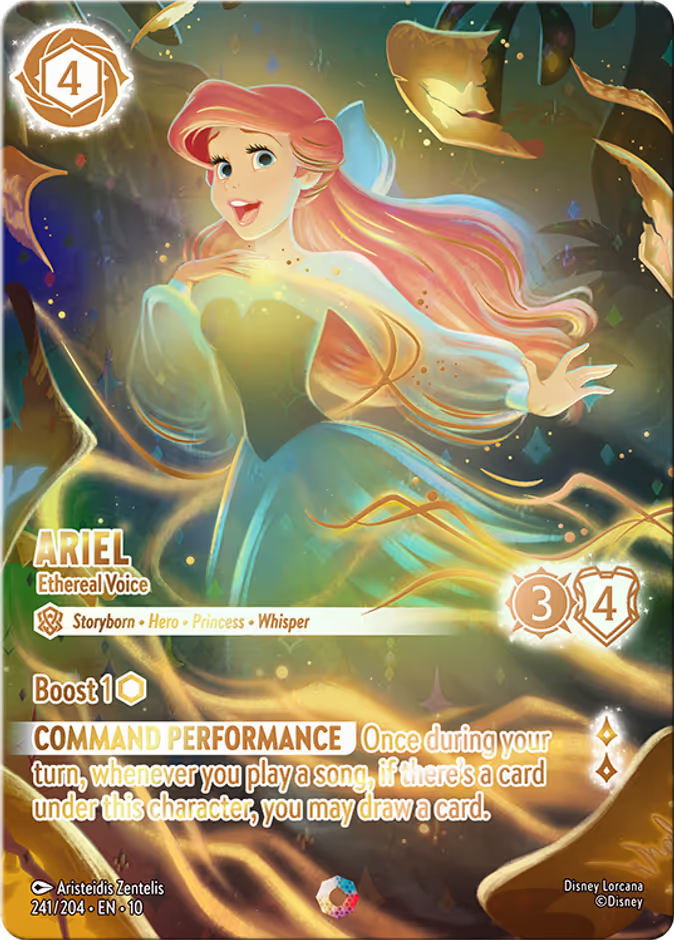 Ariel, Ethereal VoiceSet 10, Iconic
Iconic cards are the rarest printings of all.
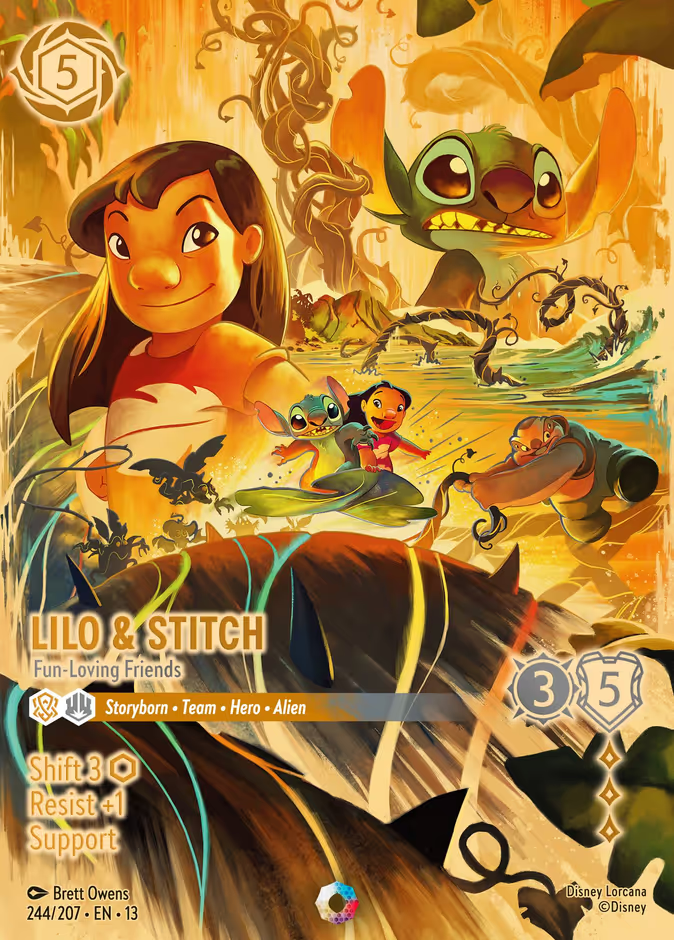 Lilo & Stitch, Fun-Loving FriendsSet 13, Iconic
Two characters on one card, and a new chase for collectors.
Collector prices change all the time and depend on condition. Play Packs are just for fun: your PlayBinder cards aren't real cards and can't be sold.
The Arena plays the real game: 60-card decks of one or two inks, a 7-card opening hand you may redraw, one card a turn into the inkwell, drying, questing, challenging, singing, Shift, items, locations that give lore, and the race to 20 lore. Each card's real cost, Strength, Willpower and lore are used, and so are all the keywords.
The most common card texts work too: drawing, dealing and removing damage, banishing, returning cards to hand, Strength changes, exerting and readying, gaining lore, searching the top of your deck and more. Card text the Arena can't play yet is still shown on the card: such actions and items can't go in a practice deck, and such characters play with their stats and keywords. Moving characters to locations, Boost and some rarer abilities are coming later.