Land
Play one per turn. Tap it for mana, the energy you spend to cast everything else.
Learn to play
Everything you need to play: how a turn works, what every kind of card does, how to build a deck, which cards to look for and which ones collectors chase. Watch the guide video first, then read on.
The guide video plays here.
Each player starts at 20 life. Creatures, spells and abilities deal damage. When a player reaches 0, they lose.
A player who has to draw a card from an empty library loses the game.
Some creatures give poison counters instead of damage. A player with ten poison counters loses. A few cards also say “you win the game”.
Cards that use more than one colour are multicoloured (shown in gold on this site); artifacts and other cards with no colour are colourless.
Play one per turn. Tap it for mana, the energy you spend to cast everything else.
Has power (damage it deals) and toughness (damage it can take). Can attack from the turn after it arrives.
A powerful ally with loyalty counters. Use one loyalty ability per turn. Opponents can attack it.
A one-shot spell you can cast at almost any time, even during your opponent's turn.
A one-shot spell cast only in your own main phase, when nothing else is happening.
A magical object that stays on the battlefield. Equipment attaches to creatures; vehicles can be crewed.
A lasting magical effect. Auras attach to a card; others affect the whole game.
Newer card type. You attack a battle to defeat it and unlock its other side.
Same as the first. Many players hold spells until after combat.
“At end of turn” abilities happen, then damage wears off and you discard down to seven cards.
This is a summary for new players. Wizards of the Coast's official rules have every detail, and they win any disagreement with this page.
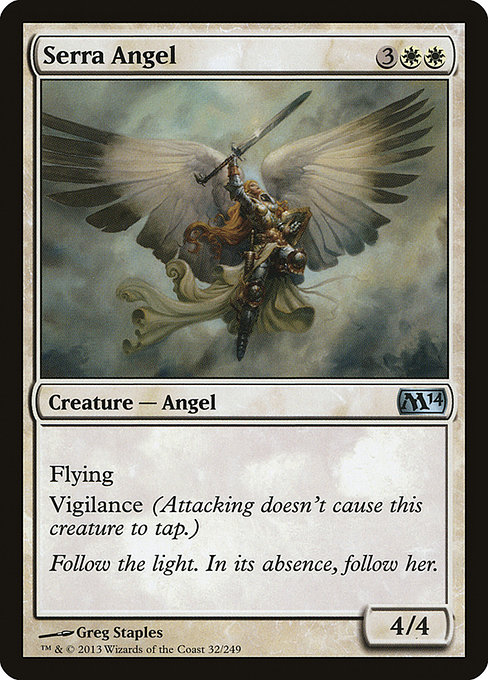
Every card shows the same things in the same places. Here is Serra Angel from Magic 2014: she has been in the game since the very first set in 1993.
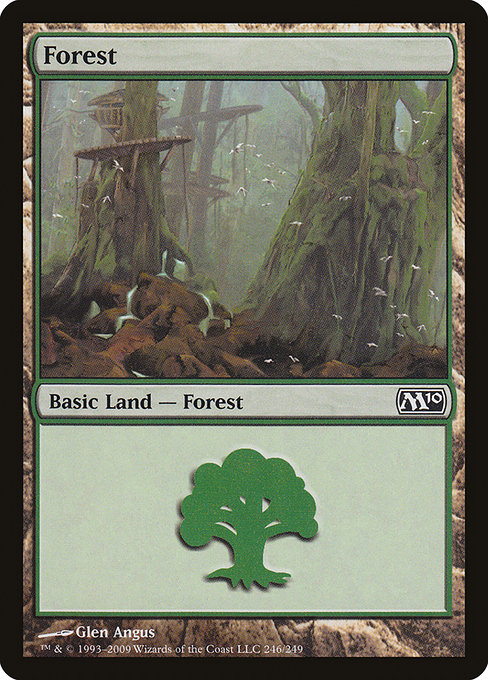
Your mana. Play one land a turn; tap it for one mana of its colour. The five basic lands are Plains (white), Island (blue), Swamp (black), Mountain (red) and Forest (green). About two-fifths of a deck is lands.
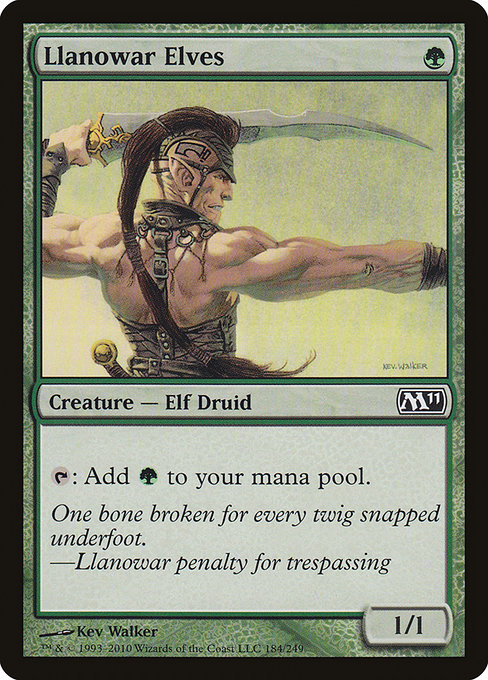
They stay on the battlefield, attack and block. A new creature has "summoning sickness": it can't attack or use a tap ability until your next turn. Llanowar Elves taps for green mana, like a land.
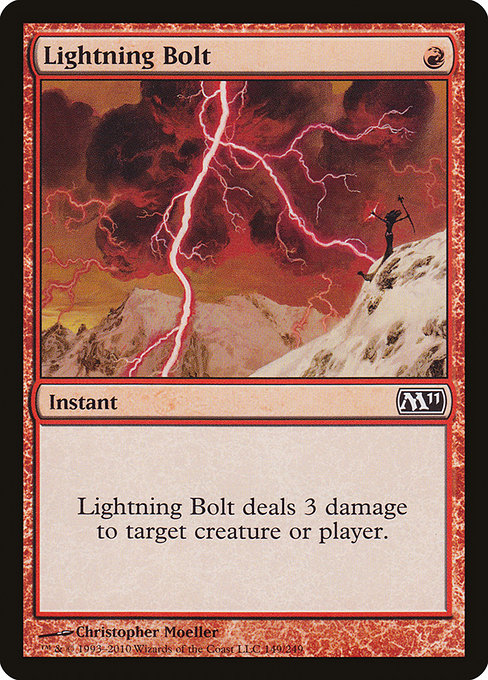
One-shot spells you can cast at any time, even on your opponent's turn and in the middle of combat. Lightning Bolt deals 3 damage to any target.
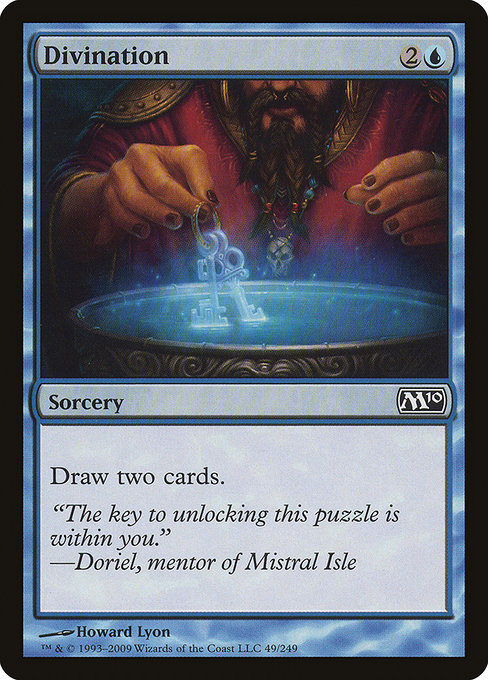
One-shot spells for your own main phase only, when nothing else is happening. Divination draws two cards.
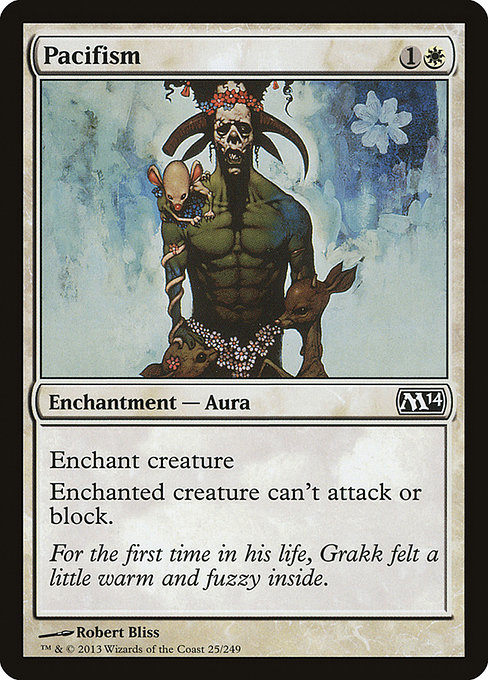
Lasting magic. An Aura is put on a creature: Pacifism stops the enchanted creature from attacking or blocking. Other enchantments change the whole game, like "creatures you control get +1/+1".
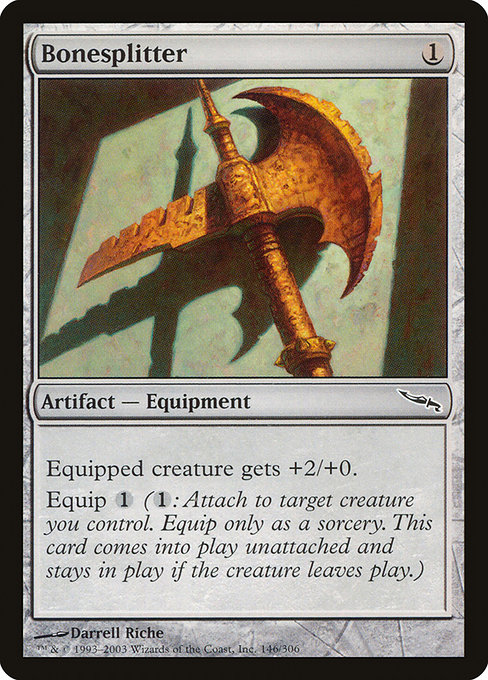
Colourless objects most decks can use. Equipment is attached to one of your creatures by paying its equip cost: Bonesplitter gives +2/+0, and moves to another creature if that one dies.
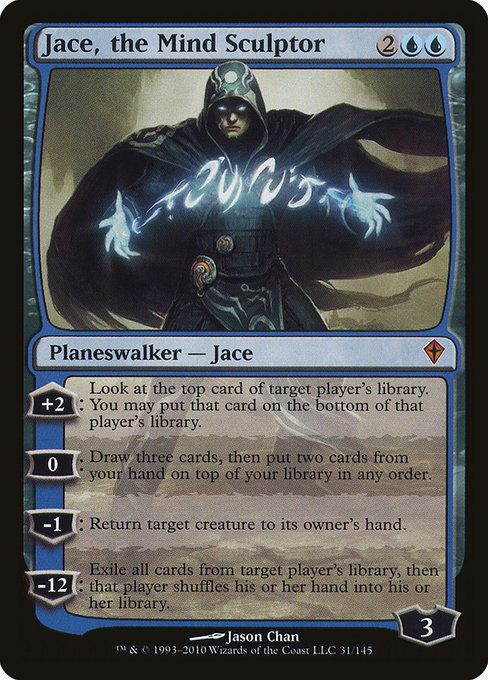
Powerful allies with loyalty counters and an ability you can use once a turn. Your opponent's creatures can attack them. (The Arena doesn't play planeswalkers yet.)
Short words in the text box that stand for a whole rule. These come up all the time:
Can only be blocked by creatures with flying or reach.
Can block creatures with flying.
Deals its combat damage first, so it can kill a blocker before that blocker strikes back.
Deals first-strike damage and regular damage: twice in one combat.
Any damage it deals to a creature destroys that creature.
Damage it deals also gains you that much life.
Damage beyond what kills its blockers goes on to the player.
Attacking doesn't tap it, so it can still block on the next turn.
Can attack and tap the turn it comes into play.
Can't be blocked except by two or more creatures.
Can't attack: a wall to block with.
Your opponent's spells and abilities can't target it.
Damage and "destroy" effects don't kill it.
Cast it any time you could cast an instant.
Damage on creatures wears off at the end of each turn, so a 4/4 that took 3 damage is as good as new on the next turn.
A deck is at least 60 cards, with no more than four of any card except basic lands. Most decks use one or two colours. A good starting shape:
Split between your colours by how many coloured symbols your spells need.
A "mana curve": several costing 1–2, more at 3–4, a few big ones at 5 and up.
Removal (destroy, damage, Pacifism), combat tricks, card draw.
Over thirty years of sets have made some cards legends. A few (they can turn up in Play Packs from their sets, just rarely):
 Black LotusLimited Edition Alpha, 1993, rare
Free to cast, sacrifice it for three mana. The most famous card in the hobby.
 Shivan DragonLimited Edition Alpha, 1993, rare
The original big dragon: a 5/5 flier that pumps its own power with red mana.
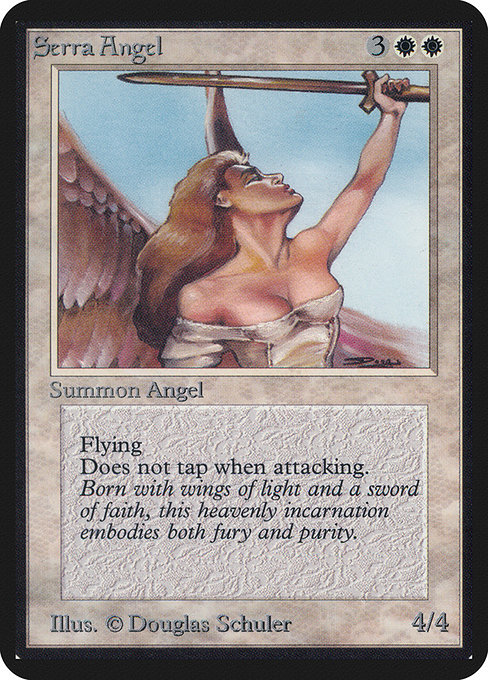 Serra AngelLimited Edition Alpha, 1993, uncommon
One of the first cards ever printed, and reprinted for decades.
Jace, the Mind SculptorWorldwake, 2010, mythic rareThe planeswalker so strong it was banned in Standard.
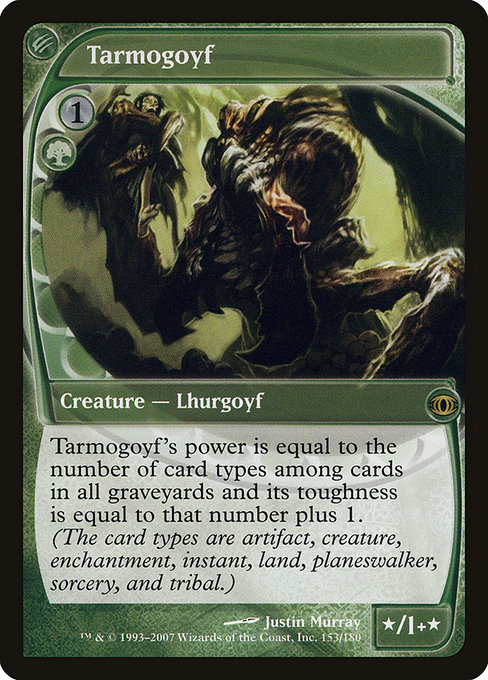 TarmogoyfFuture Sight, 2007, rare
A two-mana creature that grows with every card type in the graveyards.
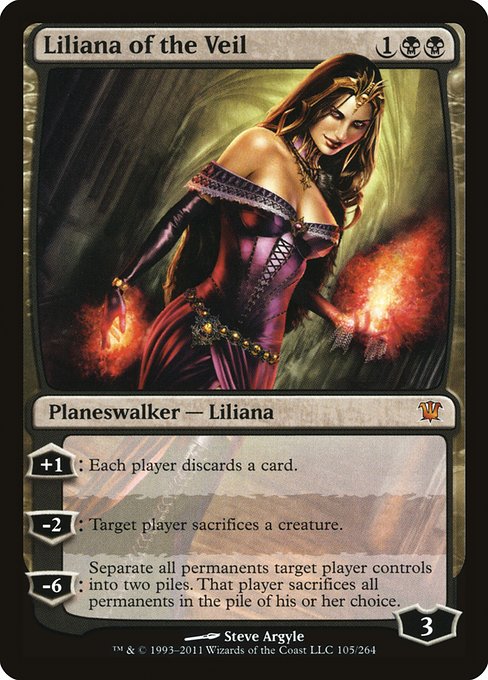 Liliana of the VeilInnistrad, 2011, mythic rare
Makes both players discard, every turn.
 Sheoldred, the ApocalypseDominaria United, 2022, mythic rare
Every card your opponent draws costs them 2 life.
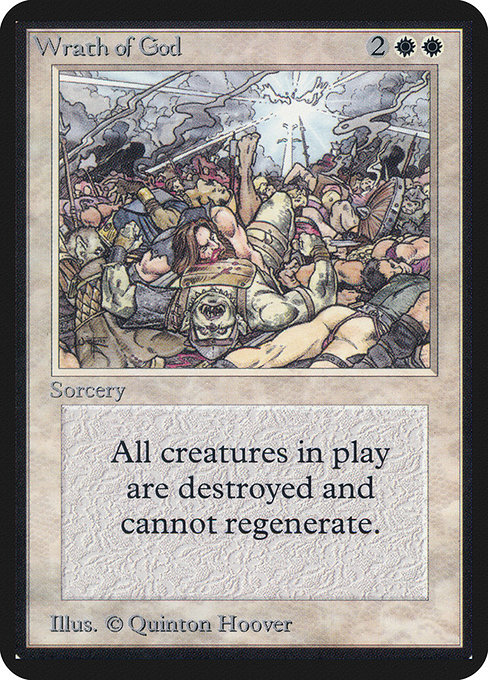 Wrath of GodLimited Edition Alpha, 1993, rare
Destroy all creatures: the classic way to start over when you're behind.
Collector prices change all the time and depend on condition. Play Packs are just for fun: your PlayBinder cards aren't real cards and can't be sold.
The Arena plays the real game: 20 life, a 60-card deck with basic lands, a 7-card opening hand with mulligans (draw 7 again, then put one card on the bottom for each mulligan), one land a turn, mana from your lands paid for you, summoning sickness, attacking with as many creatures as you like, blocking (several blockers on one attacker too), first strike and double strike, and casting instants and flash cards during combat. Each card's real mana cost, power and toughness are used, and so are flying, reach, deathtouch, lifelink, trample, vigilance, haste, menace, defender, hexproof, indestructible and prowess.
The most common card texts work too: damage, destroy and exile, returning to the hand, +X/+X until end of turn, +1/+1 counters, tokens, drawing, gaining and losing life, discard, tapping, finding a basic land, bringing creatures back from the graveyard, "enters", "dies", "attacks" and upkeep abilities, abilities you activate, Auras, Equipment and "creatures you control get +1/+1". Card text the Arena can't play yet is still shown on the card: such spells can't go in a practice deck, and such creatures play with their power, toughness and keywords. Spells resolve straight away (there's no stack), so counterspells and planeswalkers aren't played yet.