Lore · The history of the game
Lore — how Magic: The Gathering began
The first trading card game, designed by a mathematics student, published by a company run from a basement, and still growing more than thirty years later. The facts below come from the published sources listed at the bottom; set dates and card credits come from Scryfall's card data.
A mathematician with a game in his pocket
Richard Garfield was born in Philadelphia in 1963 and studied at the University of Pennsylvania, where he earned a doctorate in combinatorial mathematics in 1993. He had been designing games since he was a teenager. One of them, a board game about racing robots called RoboRally, was what he first pitched to a small Seattle-area publisher in 1991.
That publisher was Wizards of the Coast, founded by Peter Adkison in 1990. Adkison liked RoboRally but thought it too expensive and risky to produce. What he wanted was a game that was cheap to make and quick to play at conventions. Garfield went away and came back with a card game in which every player owns a different collection of cards: Magic.
- Richard GarfieldDesigner
Created Magic while finishing his mathematics doctorate at the University of Pennsylvania. He later designed RoboRally (published 1994), Netrunner (1996), King of Tokyo (2011) and KeyForge (2018).
- Peter AdkisonFounder of Wizards of the Coast
Founded the company in 1990 outside Seattle and agreed to publish Garfield's card game. Wizards went on to buy TSR, the publisher of Dungeons & Dragons, in 1997.
- Mark RosewaterHead designer
Joined Wizards of the Coast in 1995, started designing Magic cards in 1996, and became Magic's lead designer, later called head designer, in December 2003.
1993: Alpha, Beta and the first sell-out
Wizards showed the game at the Origins Game Fair in Dallas in July 1993 and released it on 5 August 1993. The first print run, now called Limited Edition Alpha, had 295 cards counting its basic land variations. It was followed in October by Beta, which fixed Alpha's mistakes, and in December by Unlimited.
The first supply of about 10 million cards sold out by October 1993. The first expansion, Arabian Nights, arrived in December 1993, and by the end of 1994 more than a billion Magic cards had been printed.
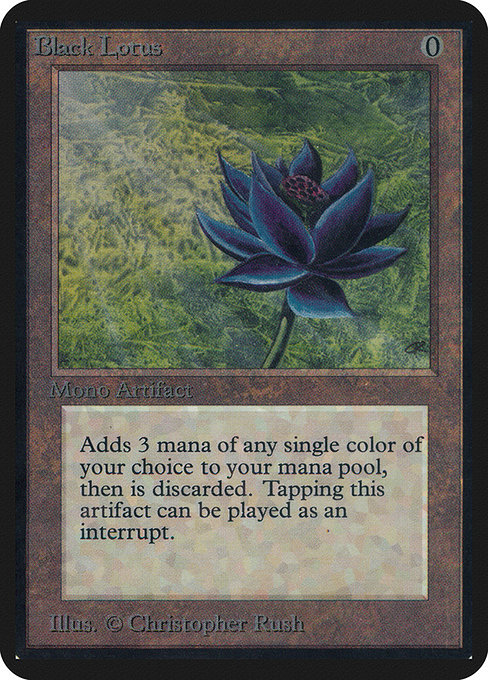
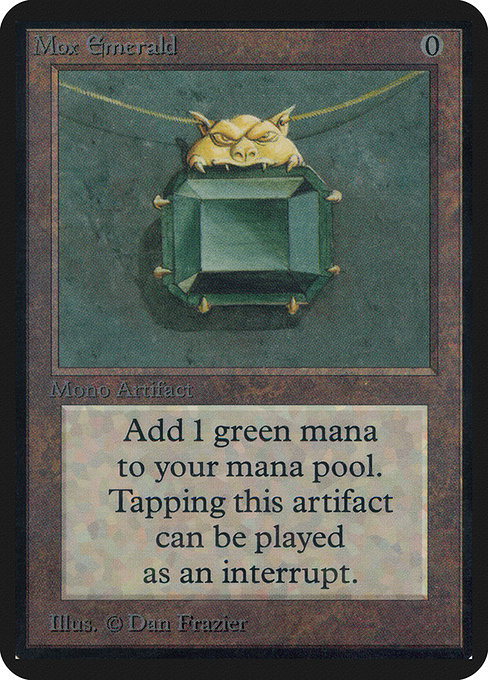
Alpha's art came from 25 artists. Dan Frazier painted the most cards (38), followed by Anson Maddocks (30) and Douglas Shuler (28). Christopher Rush painted both Black Lotus and Lightning Bolt.
- Peter Adkison founds Wizards of the Coast outside Seattle.
- Garfield, Adkison and Mike Davis meet in Oregon; Adkison asks for a fast, cheap convention game.
- Magic is shown at the Origins Game Fair in Dallas.
- Limited Edition Alpha is released.
- Limited Edition Beta follows.
- Unlimited Edition, the first printing without a set limit.
- Arabian Nights, the first expansion.
The Power Nine
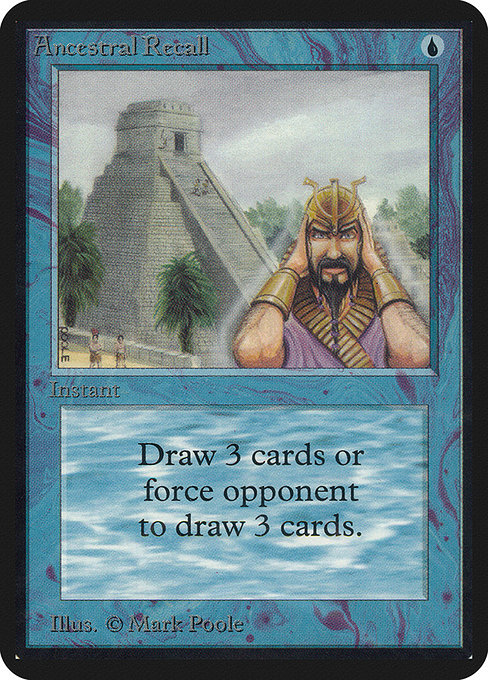
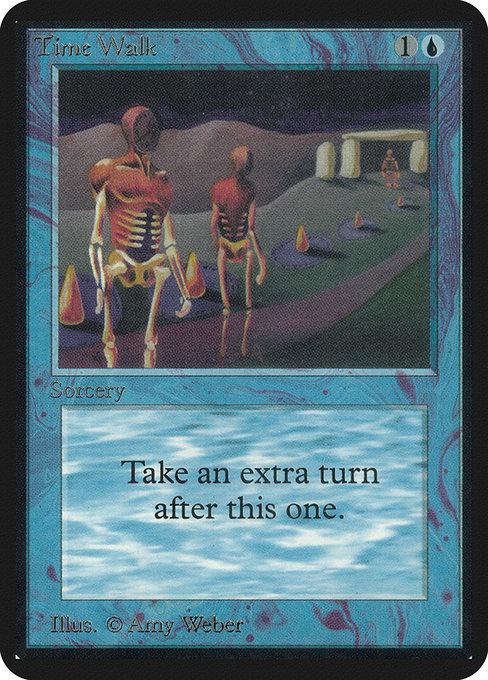
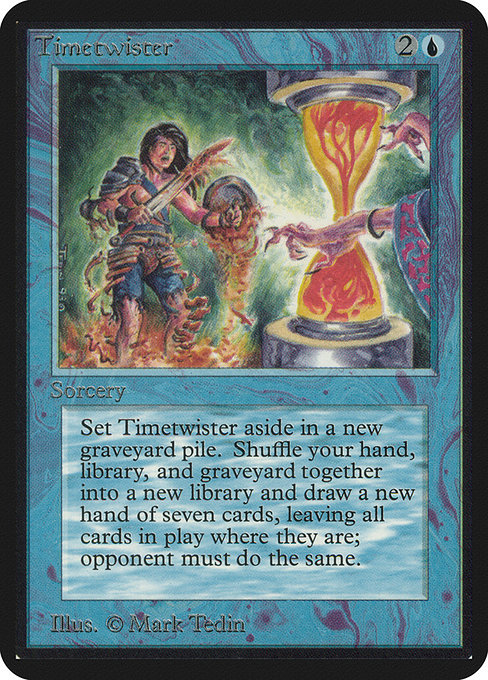
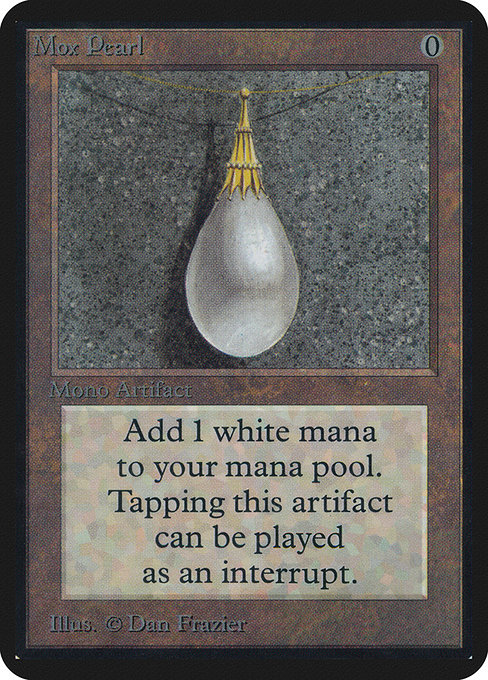
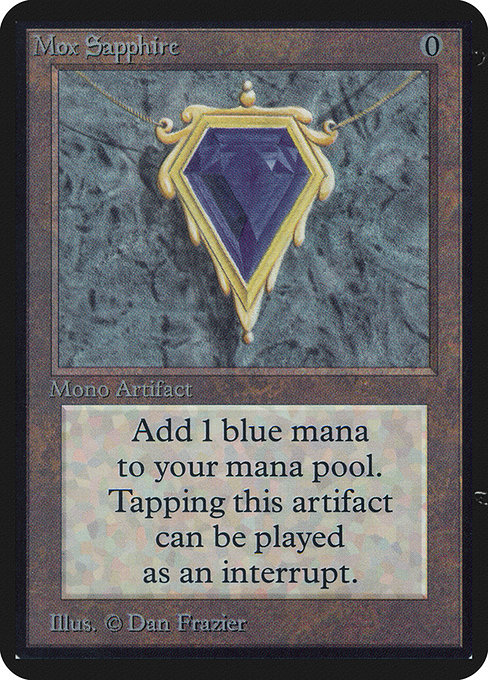
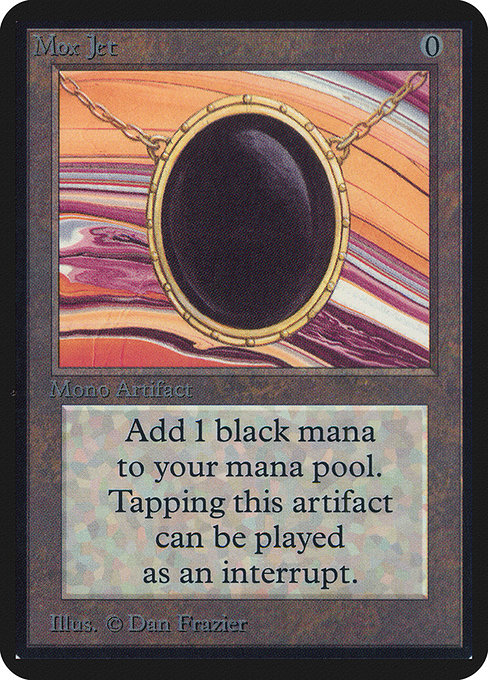
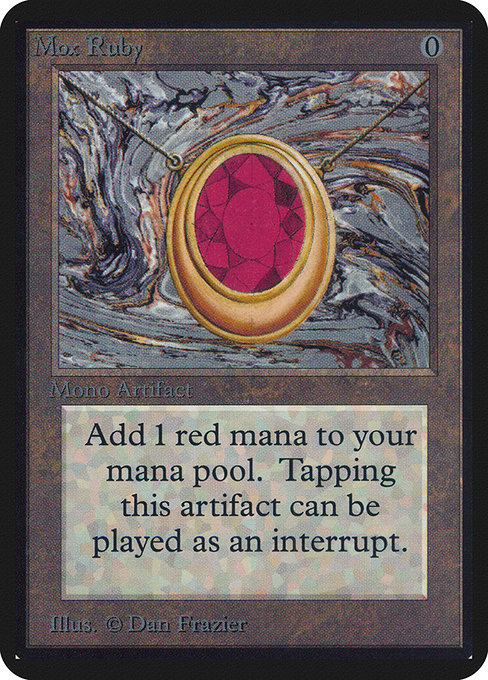
Nine rare cards from Alpha became famous as the strongest ever printed: Black Lotus, Ancestral Recall, Time Walk, Timetwister and the five Moxen (Pearl, Sapphire, Jet, Ruby and Emerald). Players call them the Power Nine. None has had a tournament-legal paper reprint since Unlimited, and original copies are among the most valuable cards in the hobby.
Wizards also keeps a Reserved List of older cards it has promised not to reprint. In the card data this site uses, 571 different cards carry the Reserved List mark.
Growing up: tournaments, Hasbro and the story
In 1996 Wizards started the Pro Tour, a series of tournaments with cash prizes. In September 1999 the toy company Hasbro bought Wizards of the Coast for about US$325 million, and Wizards has been part of Hasbro since. In 2005 the Hall of Fame was created to honour the game's best players.
The cards also told a story. Early sets visited one world at a time, and over the years the setting became the Multiverse: many planes, each with its own look and mood, linked by planeswalkers who can travel between them. Planeswalkers became cards themselves in Lorwyn (October 2007), with Ajani, Jace, Liliana, Chandra and Garruk, all five painted by Aleksi Briclot.
- Ice Age June 1995 · a frozen corner of Dominaria
- Tempest October 1997 · set on the artificial plane of Rath
- Urza's Saga October 1998
- Invasion October 2000 · the Phyrexian invasion of Dominaria
- Mirrodin October 2003 · a plane made of metal
- Ravnica: City of Guilds October 2005 · the city plane of ten guilds
- Lorwyn October 2007 · the first planeswalker cards
- Zendikar October 2009
New ways to play
Magic kept adding ways to play beyond the core rules. Commander, a multiplayer format with 100-card decks led by a legendary creature, got its own product line with Commander 2011 (June 2011). Masters sets, starting with Modern Masters in June 2013, reprinted favourite cards. Secret Lair, a line of limited special drops, began at the end of 2019 according to Scryfall's set dates.
Online, players could play Magic: The Gathering Online, and in 2018 Magic: The Gathering Arena entered open beta before its full release in 2019. This site covers paper cards only.
Magic meets other worlds
From the 2020s, Universes Beyond products brought other franchises into Magic with full, playable card sets, among them Warhammer 40,000 (October 2022), The Lord of the Rings: Tales of Middle-earth (June 2023), Doctor Who (October 2023), Fallout (March 2024) and Final Fantasy (June 2025).
By February 2023 Magic was estimated to have about fifty million players, and Hasbro reported that Magic brought in about US$1 billion in revenue in its 2022 fiscal year. Magic was inducted into the National Toy Hall of Fame in 2019.
The game today
Magic is printed in English, French, German, Italian, Japanese, Korean, Russian, Spanish and Traditional Chinese. This site lists 996 paper releases (main sets, supplements, promos and tokens) and more than 37,000 different cards from Scryfall's data, each with every printing linked.
Sources
- Magic: The Gathering — Wikipedia — Garfield's pitch, release on 5 August 1993, first sell-out, Arabian Nights, a billion cards by 1994, Pro Tour, Hasbro, Hall of Fame, Arena, player numbers, revenue, languages, National Toy Hall of Fame.
- Wizards of the Coast — Wikipedia — Founded 1990 by Peter Adkison; Origins Game Fair debut in July 1993; TSR purchase 1997; Hasbro purchase September 1999; Arena open beta 2018 and release 2019.
- Richard Garfield — Wikipedia — Birth year and place, doctorate in 1993, the games he designed.
- Mark Rosewater — Wikipedia — Joined Wizards in 1995; head designer from December 2003.
- Scryfall — Set release dates, card counts, artist credits and the Reserved List flag used on this page.