Pokémon
Your fighters. Basic Pokémon go straight into play; Stage 1 and Stage 2 Pokémon evolve from them. Each has HP, attacks, a type, a Weakness and a Retreat Cost.
Learn to play
Everything you need to play: how a turn works, what every kind of card does, how to build a deck, which cards to look for and which ones collectors chase. Watch the guide video first, then read on.
The guide video plays here.
Each time you Knock Out one of your opponent's Pokémon, take one of your Prize cards. Knock Out a Pokémon ex and you take two; a Mega Evolution Pokémon ex is worth three.
If your opponent has no Pokémon left in play, you win.
If your opponent has no cards left to draw at the start of their turn, you win.
Your fighters. Basic Pokémon go straight into play; Stage 1 and Stage 2 Pokémon evolve from them. Each has HP, attacks, a type, a Weakness and a Retreat Cost.
Tricks and help. Items (play as many as you like), Supporters (one per turn), Stadiums (one in play, shared by both players) and Pokémon Tools (attached to a Pokémon).
Fuel for attacks. Attach one Energy card from your hand to one of your Pokémon each turn. An attack's cost shows which Energy it needs.
Always, at the start of your turn.
Attacking ends your turn. The player who goes first cannot attack or play a Supporter on their very first turn.
This is a summary for new players. The official rulebook on Pokemon.com has every detail, and it wins any disagreement with this page.
Every Pokémon card tells you the same things in the same places. Here is Blastoise from the very first English set, Base Set (1999). Newer cards move things around a little, but the parts are the same.
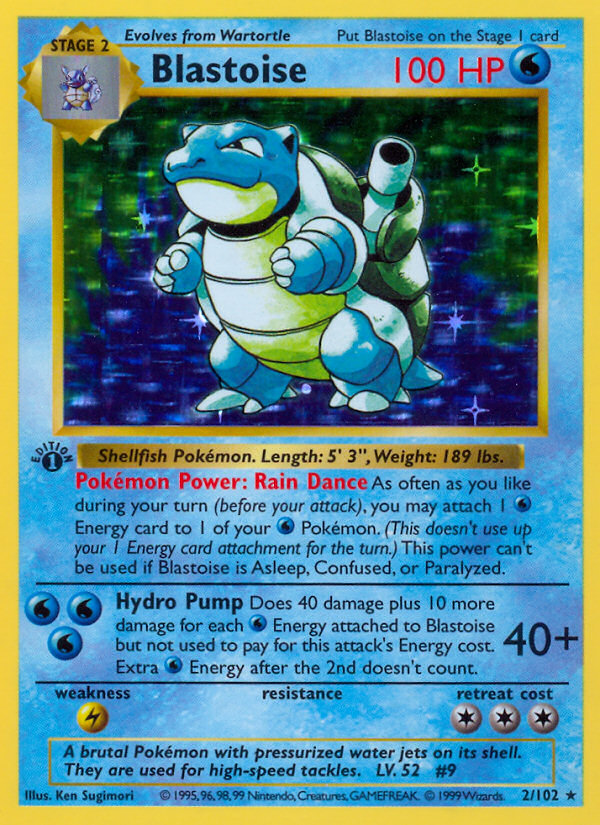 1234567
Pokémon ex, V, VMAX, GX and other "rule box" Pokémon are stronger, and when they are Knocked Out your opponent takes 2 Prize cards (3 for VMAX, TAG TEAM and Mega Evolution ex). That's the trade-off for their big attacks.
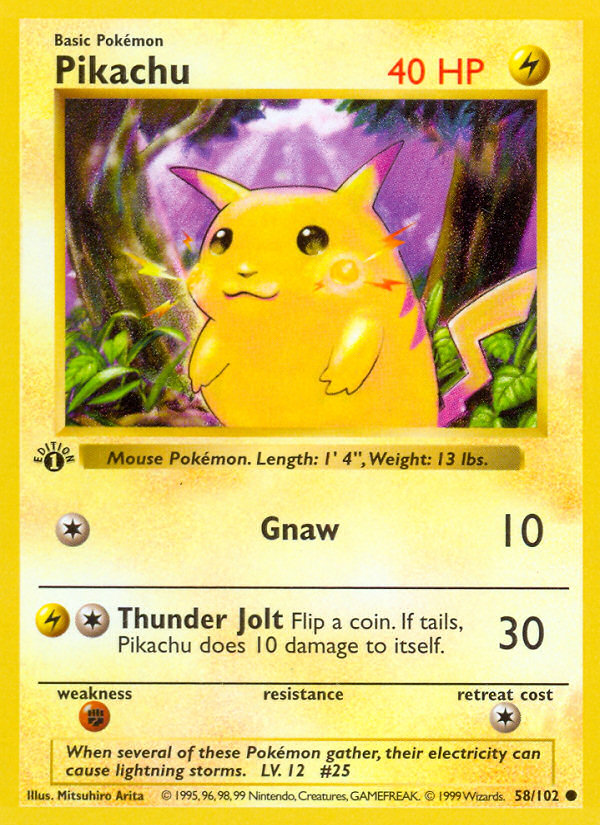
The only Pokémon you can put straight into play. Every deck needs plenty, because your opening hand must have one, and you lose if you ever run out of Pokémon in play.
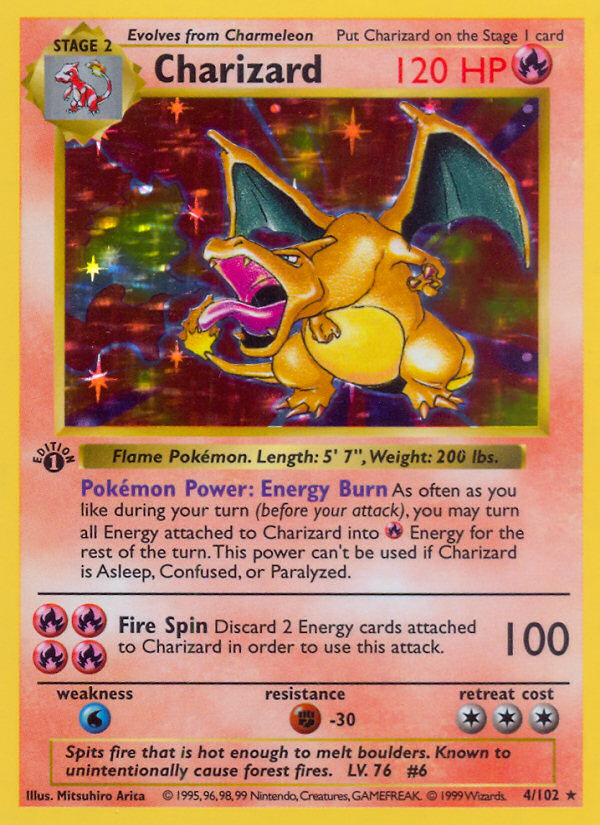
Evolutions. Play one on top of the Pokémon it evolves from (Charmander → Charmeleon → Charizard). They keep the damage and Energy already there, lose any Special Conditions, and are much stronger. You can't evolve on your first turn, or a Pokémon that came into play this turn.
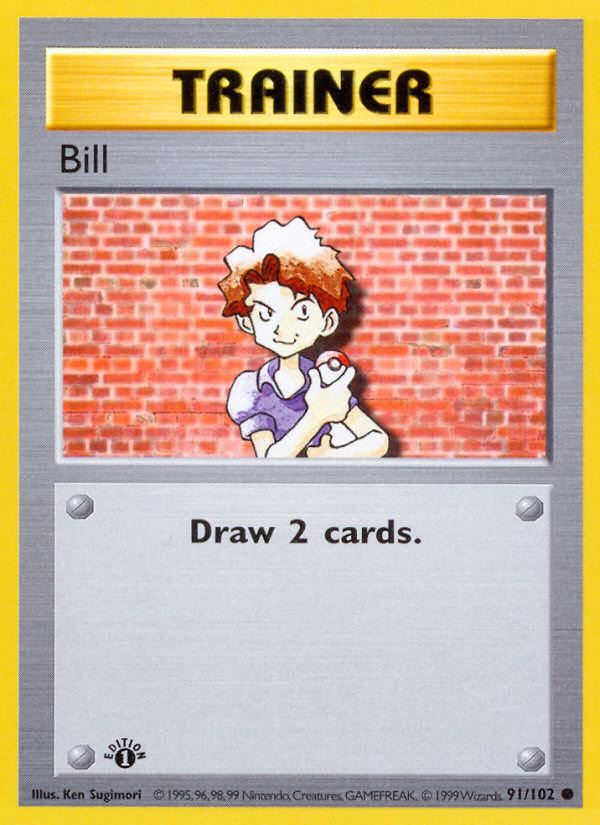
One-shot tricks: draw cards, heal, switch, search your deck. Play as many as you like in a turn, then they go to the discard pile. (Older cards just say "Trainer".)
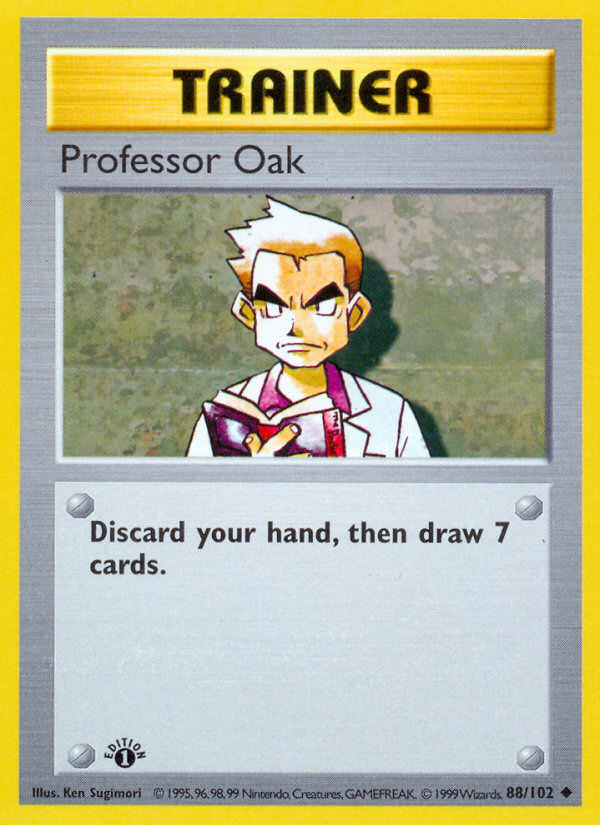
Powerful help, usually lots of new cards, but only one a turn, and the player who goes first can't play one on their very first turn. Professor Oak (later Professor's Research) is the classic: discard your hand and draw 7.
A Stadium changes the rules for both players while it's in play; a Tool is attached to one Pokémon for a lasting boost. (Both are coming to the Arena later.)
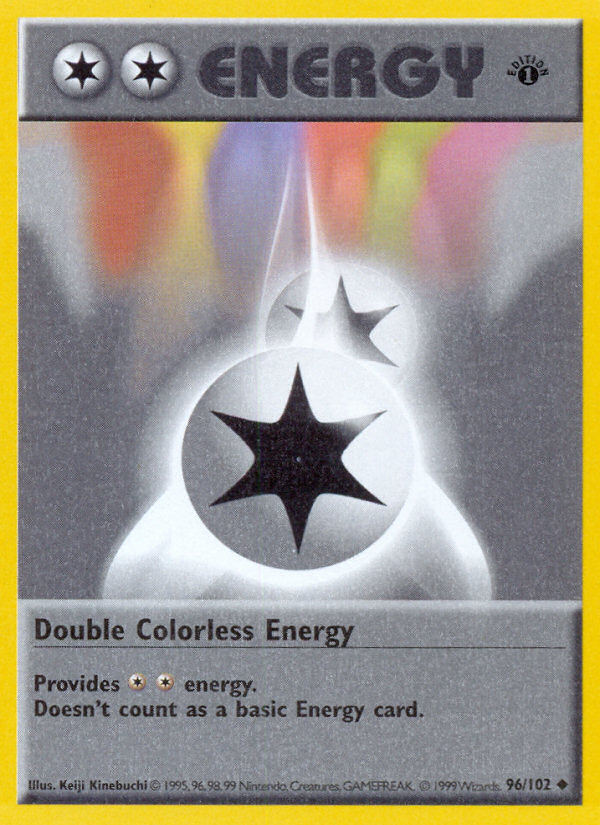
Attach one Energy card a turn to any of your Pokémon. Basic Energy comes in the types (Grass, Fire, Water, Lightning, Psychic, Fighting, Darkness, Metal, and once Fairy). Special Energy like Double Colorless counts as more, or does something extra. A ⭘ Colorless cost can be paid with any Energy.
Some attacks leave the Defending Pokémon with a Special Condition. They only affect the Active Pokémon, and all of them go away when it moves to the Bench or evolves.
Can't attack or retreat. Between turns, flip a coin: heads, it wakes up.
Can't attack or retreat for its owner's next turn, then it wears off.
Before it attacks, flip a coin: tails, the attack fails and it takes 30 damage itself.
Takes 10 damage between every turn until it's cured.
Takes 20 damage between turns, then flip: heads, the burn heals.
Asleep, Confused and Paralyzed replace each other (a Pokémon only has one of them). Poisoned and Burned can stack with them.
A deck is exactly 60 cards, with no more than four of any one card (basic Energy is the exception). A good starting shape:
One or two main evolution lines (say 4 Basic, 3 Stage 1, 2–3 Stage 2), plus a few extra Basics so you never open without one.
Mostly cards that draw and search (Professor's Research, Nest Ball, Ultra Ball), then switching, healing and Boss's Orders-style cards that pull your opponent's Pokémon into the Active Spot.
Of the one or two types your attacks need. Older decks with costlier attacks used up to 25.
Some cards are wanted for how they play; many more are wanted for how rare and beautiful they are. A few that collectors chase (they can turn up in Play Packs from their sets, just rarely):
CharizardBase Set, 1999The card that started the craze. First Edition copies in perfect condition have sold for hundreds of thousands of dollars.
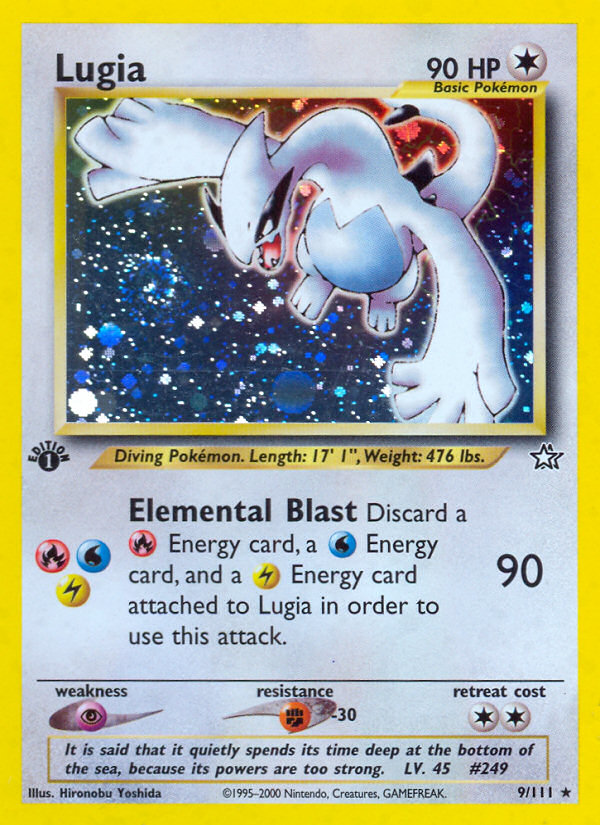 LugiaNeo Genesis, 2000
Famously hard to find well centered, which makes perfect copies very rare.
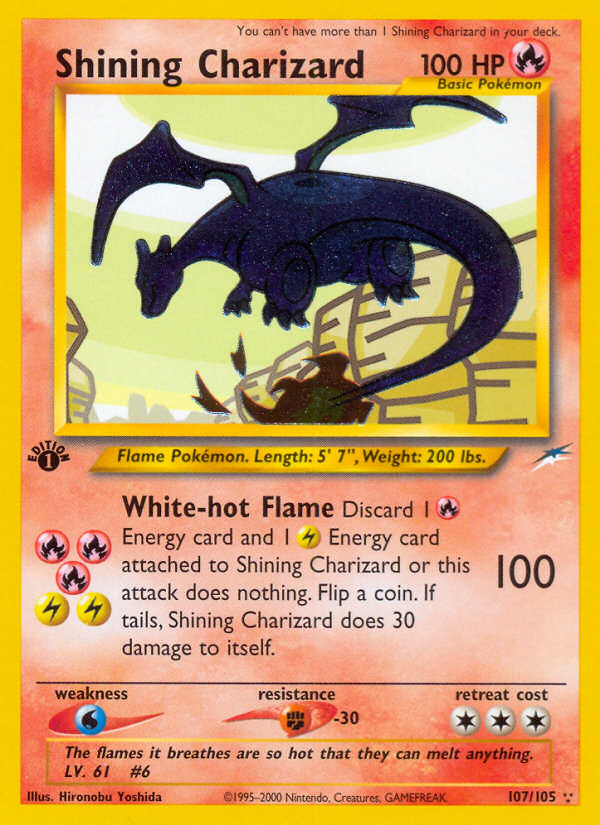 Shining CharizardNeo Destiny, 2002
One of the first shiny Pokémon cards, from a short-lived set.
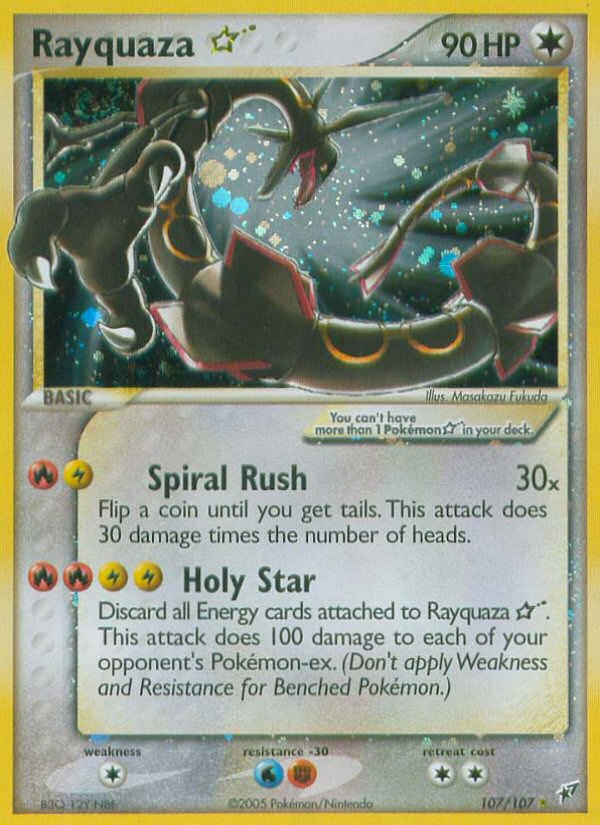 Rayquaza ★EX Deoxys, 2005
Gold Star cards were about one in every few boxes. The Rayquaza is a favorite.
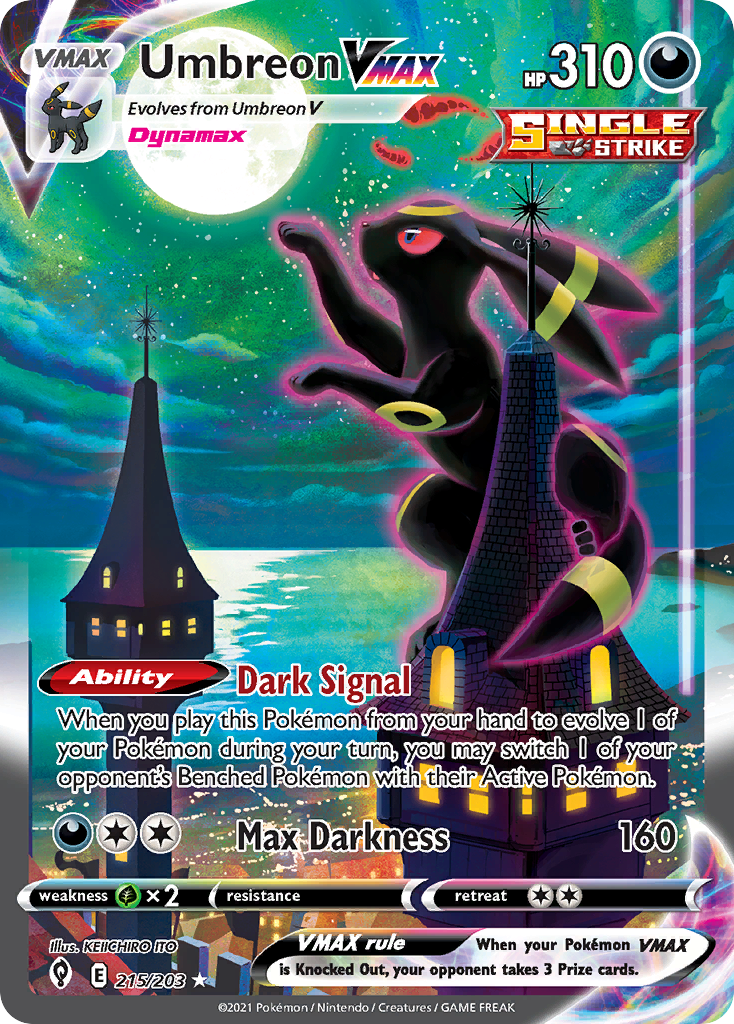 Umbreon VMAXEvolving Skies, 2021
"Moonbreon", the alternate art that became the most wanted modern card.
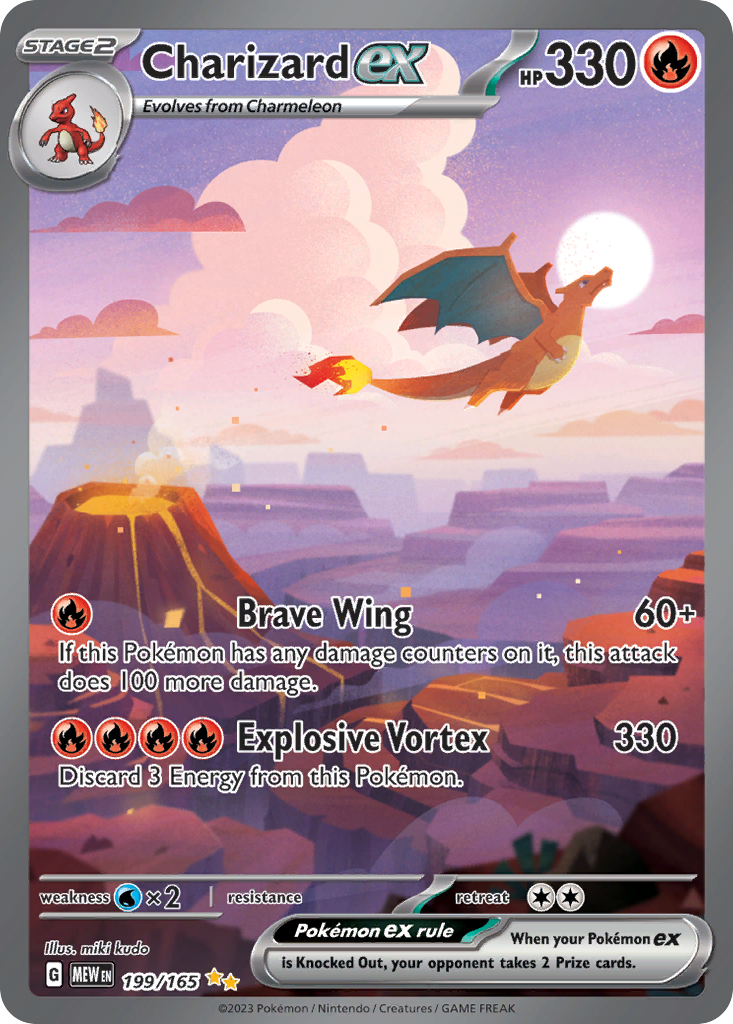 Charizard ex151, 2023
A Special Illustration Rare from the set that brought back the original 151 Pokémon.
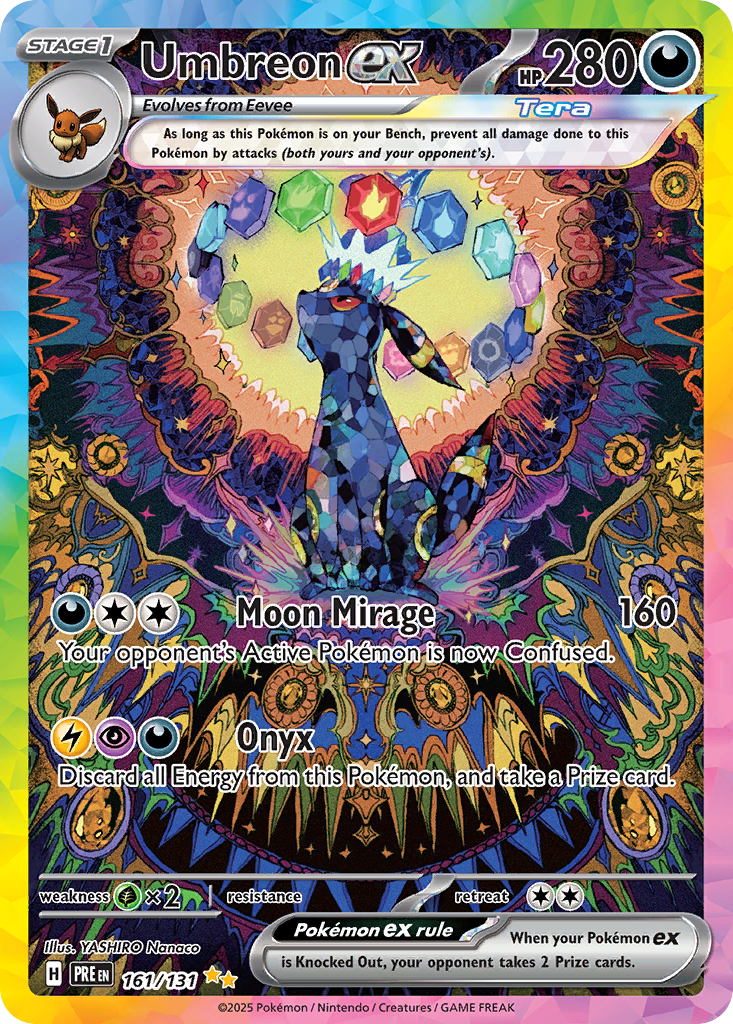 Umbreon exPrismatic Evolutions, 2025
The chase card of one of the most sought-after sets ever printed.
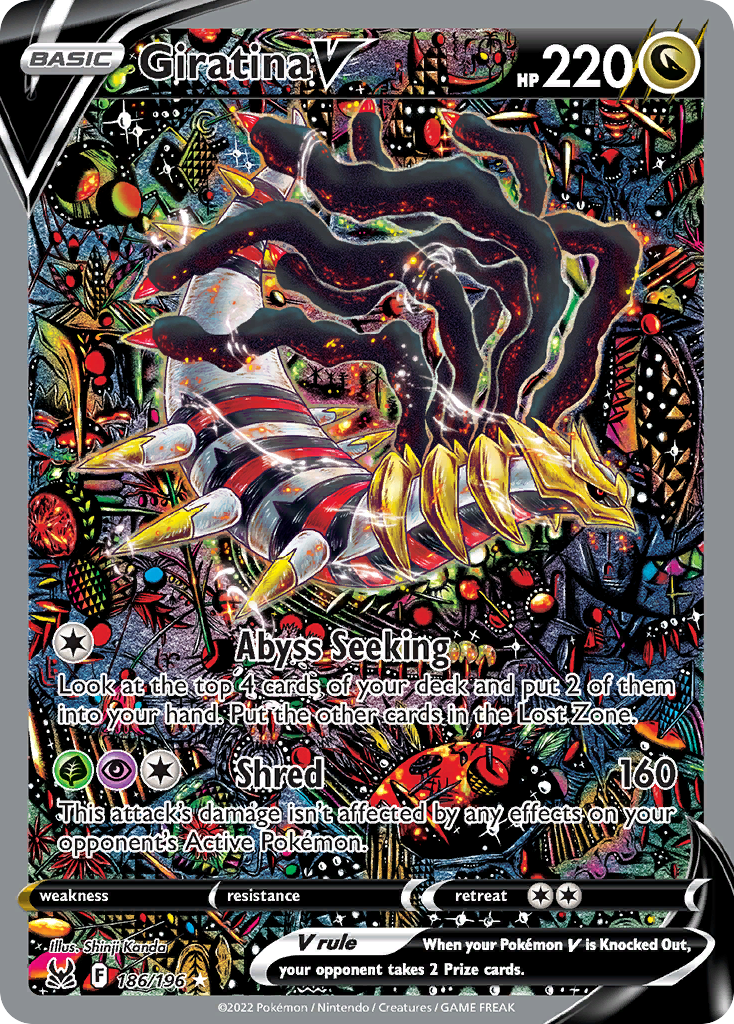 Giratina VLost Origin, 2022
An alternate art that is great to look at and was a strong card to play, too.
Collector prices change all the time and depend on condition. Play Packs are just for fun: your PlayBinder cards aren't real cards and can't be sold.
The Arena plays the real game: 60-card decks, 6 Prize cards, one Energy and one Supporter a turn, evolution, retreating, Weakness and Resistance, all five Special Conditions and the three ways to win. Each card's real HP, attacks, costs and damage are used.
The most common card texts work too: coin flips, Special Conditions, healing, drawing, searching, switching, Bench damage, damage that grows with Energy or damage counters, Rare Candy, Professor Oak, Gust of Wind, Boss's Orders and many more. Card text the Arena can't play yet is still shown on the card: such Trainers can't go in a practice deck, and such attacks just do their printed damage. Abilities, Stadiums, Tools and a few special kinds of Pokémon (BREAK, LEGEND, Level-Up) are coming later.