World & How to Play
The world, and how to play
Two players, two 60-card decks, and one goal: take all six of your Prize cards first. Here is the whole game on one page, then the world the cards come from.
How to play
Take all six Prize cards
Each time you Knock Out one of your opponent's Pokémon, take one of your Prize cards. Knock Out a Pokémon ex and you take two; a Mega Evolution Pokémon ex is worth three.
Leave them with no Pokémon
If your opponent has no Pokémon left in play, you win.
Their deck runs out
If your opponent has no cards left to draw at the start of their turn, you win.
The three kinds of card
Pokémon
Your fighters. Basic Pokémon go straight into play; Stage 1 and Stage 2 Pokémon evolve from them. Each has HP, attacks, a type, a Weakness and a Retreat Cost.
Trainer
Tricks and help. Items (play as many as you like), Supporters (one per turn), Stadiums (one in play, shared by both players) and Pokémon Tools (attached to a Pokémon).
Energy
Fuel for attacks. Attach one Energy card from your hand to one of your Pokémon each turn. An attack's cost shows which Energy it needs.
Setting up
- Build a 60-card deck. No more than four copies of any card with the same name, except basic Energy.
- Shuffle and draw seven. No Basic Pokémon in your hand? Show it, shuffle it back and draw again (a mulligan). Each time, your opponent may draw one extra card.
- Place your Pokémon. Put one Basic Pokémon face down in the Active Spot and up to five more on your Bench.
- Set aside six Prize cards from the top of your deck, face down.
- Flip a coin to see who goes first, then turn your Pokémon face up.
Your turn, in order
- 1
Draw a card
Always, at the start of your turn.
- 2
Do any of these, in any order
- Put Basic Pokémon from your hand onto your Bench.
- Evolve your Pokémon (not on your first turn, and not a Pokémon that came into play this turn).
- Attach one Energy card to one of your Pokémon.
- Play Item cards, one Supporter and one Stadium.
- Retreat your Active Pokémon once, by discarding Energy equal to its Retreat Cost.
- Use Abilities.
- 3
Attack
Attacking ends your turn. The player who goes first cannot attack or play a Supporter on their very first turn.
Words you will see
- Knock Out
- A Pokémon whose damage reaches its HP is Knocked Out and discarded with everything attached. Its owner replaces it from the Bench.
- Weakness and Resistance
- Weakness usually doubles the damage from one type. Resistance takes damage away, commonly 30.
- Special Conditions
- Asleep Burned Confused Paralyzed Poisoned Affect only the Active Pokémon, and go away when it moves to the Bench or evolves.
- Pokémon Checkup
- Between turns, Poison and Burn deal their damage and sleepers flip to wake up.
This is a summary for new players. The official rulebook on Pokemon.com has every detail, and it wins any disagreement with this page.
The world the cards come from
The fantasy
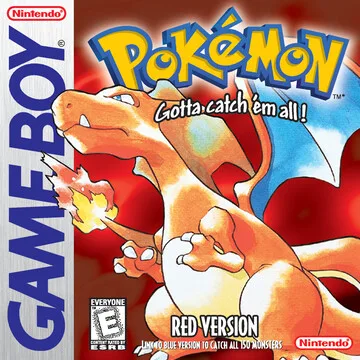
A child is old enough to travel. A professor hands them a Pokémon and a Pokédex. The road has towns, wild places, and Gyms where a specialist will battle them. At the end of the road there is usually a Champion. That pattern is the heart of the series, from the 1996 Kanto games onward.
The fantasy is not that the world is empty until you arrive. People already run shops, contests, and labs. Pokémon already live in the grass. You are late to a place, which is why the trip feels like discovery rather than conquest.
Trainers and Pokémon
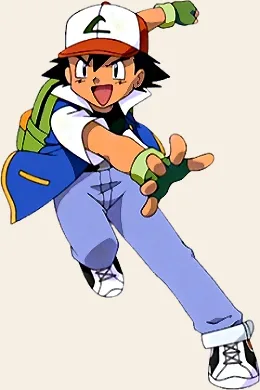
A trainer is a person who partners with Pokémon. The partner is not a tool in the story’s better moods and not a person with a human job either. Battles are a sport and a language: types, moves, and held items are how the games make that language precise.
Care is the other half. Centers heal. Berries, grooming, and friendship change what a Pokémon will do. The anime leans on this half. Ash’s Pikachu refuses the Poké Ball and still stays. The games lean on the battle half, then remind you with a following sprite or a camp.
Regions
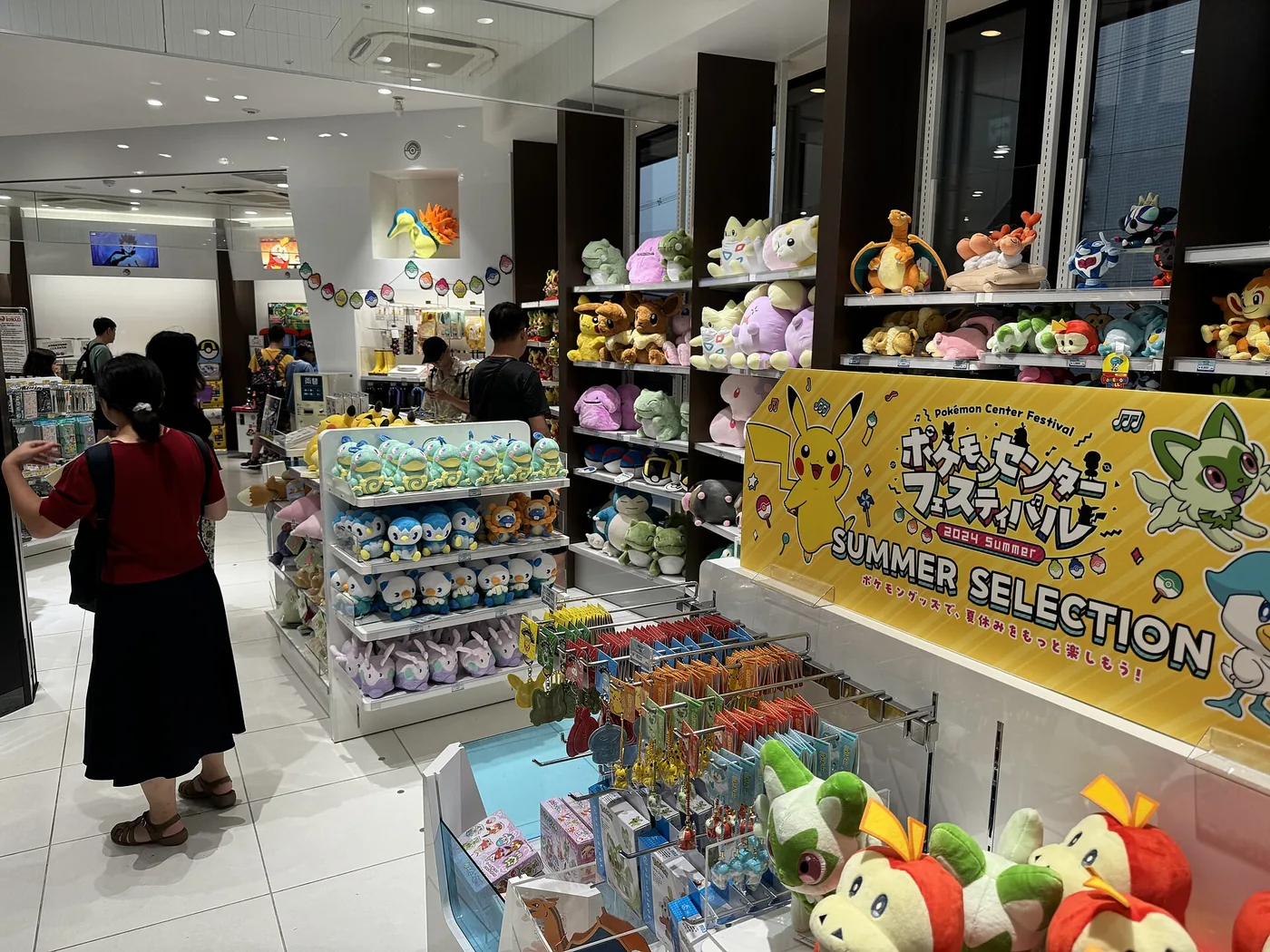
Each generation adds a region with its own starter trio, Gyms or trials, and a legendary that belongs to that map. Kanto, Johto, Hoenn, Sinnoh, Unova, Kalos, Alola, Galar, and Paldea are the mainline lands. Hisui is Sinnoh in an earlier century. Orre, from Colosseum, is a spin-off desert. The Orange Islands are anime geography.
Regions share rules. A Pokémon from an older game can often travel to a newer one, which is why the world feels continuous even when the protagonist is new. A new hero does not erase Red or Cynthia. They become people you might still meet.
.jpg)

.jpg)


Becoming a trainer
The public story of a beginning is simple: you are given one Pokémon, you choose a direction, and you learn by losing. Professors differ — Oak wants a Pokédex, Elm is studying eggs, Kukui is a teacher — but the send-off is the same.
There is no single age for every protagonist. The anime presents Ash as 10. Several companions are presented as 10 when they start. The games rarely print a number. This page states an age only when a public telling does, and leaves the field out otherwise.
Games, anime, and movies
The games are the spine of the regions and the battle rules. The anime borrows those regions and tells a road story, mostly through Ash until 2023, then through Liko and Roy. It is not a walkthrough. Gym order, teams, and outcomes diverge on purpose.
Theatrical movies, usually each summer in Japan from 1998 through the 2010s, take a legendary or a mythical and give it one evening. Some sit inside the ongoing anime. I Choose You! and The Power of Us are alternate tellings, not episodes you missed.
Spin-offs change the job and keep the world. Snap is photography. Ranger is a public service. Mystery Dungeon is a society of Pokémon with no human Gyms. Pokémon GO puts the same creatures on real streets. None of these cancel the main series. They show the same idea from another desk.


Sources for the rules
- Pokémon TCG rules and rulebooks — Pokemon.com — The official rules, with downloadable rulebooks for the current series.
- Pokémon Trading Card Game — Bulbapedia — Deck size, the four-copy limit, first-turn restrictions.
- Mega Evolution Pokémon ex (TCG) — Bulbapedia — Prize cards taken for Pokémon ex and Mega Evolution Pokémon ex.